Discover 10 profitable Shopify dropshipping niches for 2026, from pet lifestyle and home organization to sleep products and creator tools. Learn how to validate demand, calculate real margins, assess suppliers, reduce inventory risk, and build a trusted niche store with Looperbuy.
Finding profitable Shopify dropshipping niches in 2026 is no longer about copying a viral product, launching a general store, and hoping paid ads produce a quick win. The sellers who build sustainable revenue choose a defined customer problem, validate demand before investing, and pair differentiated products with dependable sourcing and fulfillment.
For Looperbuy customers, the opportunity is especially clear: a focused niche store can test products from China without committing to large inventory orders, while a reliable sourcing and fulfillment workflow helps reduce the operational burden of warehousing, payment coordination, and international shipping management.
Table of Contents
What Makes a Shopify Dropshipping Niche Profitable in 2026?
A profitable niche has more than high search interest. From a practical operator’s perspective, it should meet five conditions:
– It solves a visible or recurring problem. Buyers understand why they need the product without a long explanation.
– It supports healthy unit economics. The sales price must leave room for product cost, shipping, payment fees, advertising, refunds, and customer support.
– It can be differentiated. Sellers need a reason for customers to choose their product over a marketplace listing.
– It is operationally realistic. Product size, weight, fragility, delivery speed, compliance, and return risk all matter.
– It can become a brand. The strongest niches support bundles, accessories, repeat purchases, content creation, or a community.
The most important shift is this: customers are becoming less tolerant of anonymous, low-quality products and unclear delivery expectations. A single-product store can still work, but only if it presents a clear solution, credible product information, strong visuals, and reliable after-sales support.
This article outlines ten product categories with high potential, including sleep technology products, pet supplies, eco-friendly goods, home décor, elderly care products, coffee accessories, emergency preparedness supplies, ergonomic office equipment, home beauty devices, and creator gear. The guide also analyzes practical validation processes, risk assessment frameworks, and product selection strategies.
Quick Comparison: Best Shopify Dropshipping Niches
| Shopify Dropshipping Niche | Typical Product Opportunity | Margin Potential | Operational Difficulty | Main Risk | Best Store Angle |
| Sleep and recovery | Sleep masks, posture pillows, white-noise accessories | Medium to high | Medium | Health-related claims | Better sleep routines |
| Pet lifestyle | Smart feeders, travel gear, beds, enrichment toys | Medium to high | Medium | Heavy competition | Pet-parent convenience |
| Eco-practical products | Reusable home goods, compostable accessories, solar gear | Medium | Medium | Greenwashing claims | Practical sustainability |
| Small-space living | Storage, renter-friendly décor, modular organizers | Medium | Low to medium | Bulky shipping | Better living in less space |
| Senior-friendly home products | Grip aids, lighting, easy-open tools | High | Medium | Safety and medical claims | Independent daily living |
| Home coffee | Scales, frothers, reusable capsules, organizers | Medium | Low | Commodity competition | Café-quality coffee at home |
| Emergency readiness | Radios, lights, compact storage, water containers | Medium | Medium | Seasonal demand | Everyday preparedness |
| Home-office ergonomics | Laptop stands, footrests, keyboard accessories | High | Medium | Product quality expectations | Comfortable hybrid work |
| At-home beauty tools | LED devices, facial tools, grooming accessories | High | High | Compliance and claims | At-home beauty routines |
| Creator equipment | Microphones, lights, phone mounts, desk setups | Medium to high | Medium | Fast-moving technology | Create better content anywhere |
Practical recommendation: New sellers should usually begin with lightweight, non-fragile, non-regulated products. That often makes home organization, pet accessories, coffee accessories, and creator tools safer starting points than electronics, cosmetics, or large furniture.
1. Sleep, Recovery, and Everyday Wellness Products
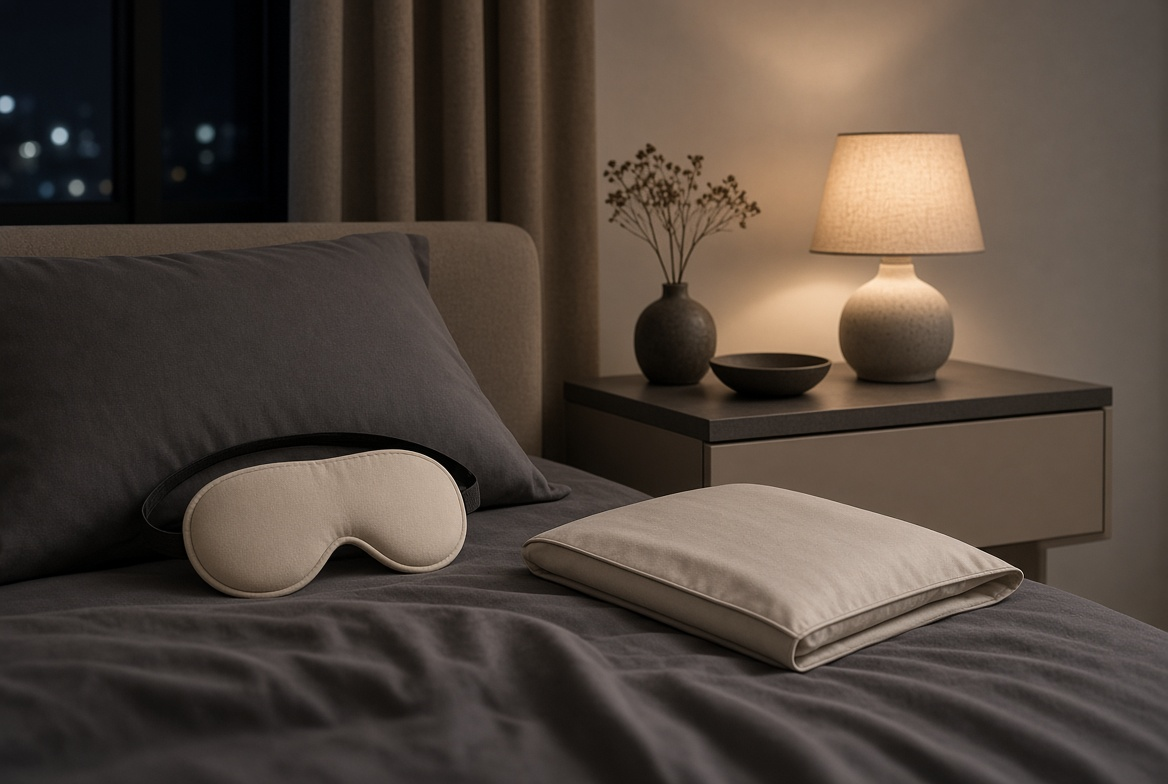
Sleep is a strong opportunity because it connects to a continuing consumer need rather than a short-lived novelty. Buyers are looking for ways to improve their bedtime environment, reduce distractions, and create recovery routines at home.
The wellness market provides a useful context. McKinsey reported that the U.S. wellness market was valued at approximately $480 billion, with consumers continuing to prioritize wellness in daily purchasing decisions. Its research also identified sleep as an area with substantial unmet consumer needs.
Products to consider
– Contoured blackout sleep masks
– Travel pillows and compact neck-support products
– White-noise machines and sound accessories
– Bedside organization products
– Cooling pillowcases and sleep-oriented bedding accessories
– Relaxation lamps and soft-light alarm clocks
How to position the store
Avoid presenting products as treatments or cures. Instead, frame the offer around a better evening routine, more comfortable travel, or a calmer sleep environment.
For example, instead of writing, “This pillow cures insomnia,” write:
> “Designed to support a quieter, more comfortable bedtime routine at home or while traveling.”
2. Pet Lifestyle and Pet-Parent Convenience
Pet products remain one of the best dropshipping niches because owners often buy emotionally, purchase repeatedly, and value convenience. However, a broad “pet store” is hard to differentiate. A more effective approach is to build around a specific pet-owner scenario.
Examples include:
– Apartment living with cats
– Travel products for small dogs
– Enrichment products for indoor pets
– Comfort products for older pets
– Clean-home solutions for pet owners
– Workday feeding and monitoring routines
High-potential product groups
– Elevated feeding accessories
– Slow-feeder bowls and enrichment mats
– Pet travel organizers
– Seat protectors and portable water bowls
– Minimalist pet beds
– Grooming tools and hair-removal products
– Smart feeder accessories
Data indicates that smart feeders, GPS collars, and orthopedic pet beds are high-value products. While these items help increase the average order value, they also require more rigorous supplier vetting, as quality defects or app-related issues can easily lead to returns.
Expert insight: sell systems, not isolated products
Instead of selling one slow-feeder bowl for $18, create a “Calm Mealtime Kit” containing:
– A slow-feeder bowl
– A lick mat
– A silicone cleaning brush
– A feeding-placement guide
This increases perceived value, reduces direct price comparison, and gives your store a clearer brand story.
3. Eco-Practical Goods and Reusable Everyday Products
Sustainability can be a powerful purchase driver, but shoppers increasingly expect performance as well as environmental benefits. A reusable product that feels inconvenient, flimsy, or difficult to clean will not earn repeat customers.
The better approach is to focus on eco-practicality: products that reduce waste while also making daily life easier.
Good product directions
– Reusable food-storage products
– Refillable travel containers
– Compostable phone and tablet cases
– Reusable cleaning cloths and organizers
– Compact solar-powered outdoor accessories
– Refillable soap and personal-care dispensers
– Water-saving household accessories
Product-page rules for environmental claims
Be specific. If a product uses bamboo, wheat straw, recycled plastic, or biodegradable materials, describe exactly what the supplier can verify.
Do not make unsupported claims such as:
– “100% zero waste”
– “Completely biodegradable everywhere”
– “Carbon neutral”
– “Better for the planet”
A more credible description is:
> “Made with a wheat-straw composite material. Material composition and disposal guidance should be confirmed with the supplier before publication.”
This language is more transparent and helps reduce compliance and trust risks.
4. Small-Space Living, Renter-Friendly Décor, and Organization
Small-space products can be highly visual, easy to demonstrate in short videos, and useful across many customer groups: renters, students, first-home buyers, apartment dwellers, and people working from home.
The strongest angle is not simply décor. It is space transformation.
Products with strong content potential
– Stackable storage bins
– Cable-management systems
– Under-bed organizers
– Foldable laundry solutions
– Adhesive hooks and renter-friendly mounting systems
– Drawer dividers
– Compact kitchen organizers
– Peel-and-stick decorative accessories
– Modular shelving accessories
Content strategy example
A product listing should show the “before” and “after” situation:
| Content Asset | What It Should Show |
| Main product image | Clean, close-up product view |
| Lifestyle image | Product used in a small apartment |
| Comparison image | Messy drawer versus organized drawer |
| Short video | Installation or setup in under 30 seconds |
| Bundle image | Multiple products solving one room problem |
| FAQ graphic | Dimensions, materials, weight capacity, installation notes |
5. Senior-Friendly Home Products and Independent Living
The senior-care category deserves more attention from ecommerce sellers because it is driven by long-term demographic demand, not a passing social trend. The U.S. Census Bureau reported that the population aged 65 and older reached 61.2 million in 2024, accounting for 18.0% of the U.S. population.
The buyer is often not the older adult. It may be an adult child trying to help a parent live more comfortably and independently.
Products to consider
– Easy-grip kitchen tools
– Electric jar openers
– Large-button clocks
– Magnifying lamps
– Bedside storage solutions
– Non-slip household accessories
– Lightweight reacher tools
– Easy-to-use remote-control organizers
Important positioning rule
Avoid calling ordinary home products “medical devices” unless they are properly certified and documented. Focus on comfort, visibility, grip, accessibility, and everyday convenience.
For example:
> “A practical kitchen aid designed to make everyday jar opening easier.”
This niche can be less crowded than general wellness or pet products, but trust is essential. Use clear instructions, accurate dimensions, accessible font sizes, and realistic demonstration videos.
6. Home Coffee and Everyday Ritual Products
The home-coffee market is attractive because it supports multiple price points and encourages add-on purchases. Customers may buy a frother today, a scale next month, and reusable accessories later.
Strong product categories
– Digital coffee scales
– Milk frothers
– Coffee-station organizers
– Reusable coffee capsules
– Portable espresso accessories
– Pour-over filters and stands
– Coffee-bean storage containers
– Latte-art tools
Best positioning angle
Build around the outcome: a café-style ritual without leaving home.
Avoid selling a random group of coffee accessories. Instead, organize your store into collections such as:
– The Morning Espresso Setup
– The Beginner Pour-Over Kit
– Small-Kitchen Coffee Storage
– Gifts for Coffee Lovers
This structure makes the shopping experience easier and naturally increases bundle opportunities.
7. Emergency Preparedness for Everyday Households
Emergency preparedness products can work well when marketed responsibly. The target customer is often not an extreme survival enthusiast. It is a household that wants practical tools for storms, power interruptions, camping trips, road travel, or outdoor activities.
Suitable product options
– Rechargeable lanterns
– Multi-power radios
– Compact emergency storage bags
– Waterproof document pouches
– Headlamps
– Portable charging accessories
– Compact first-aid storage organizers
– Weatherproof flashlight cases
Avoid fear-based marketing
Do not rely on exaggerated disaster messaging. A better brand position is:
> “Practical tools for power outages, road trips, weekend camping, and everyday readiness.”
This creates a broader customer base and a more trustworthy brand tone.
8. Home-Office Ergonomics and Hybrid Work Accessories
Hybrid work has turned desk comfort into a repeat purchasing category. Office workers, freelancers, students, gamers, and content creators all need better setups, but the best dropshipping products in this niche are usually smaller accessories rather than heavy furniture.
Product ideas
– Aluminum laptop stands
– Footrests
– Monitor risers
– Cable-management kits
– Keyboard wrist rests
– Webcam lighting
– Desk organizers
– Vertical laptop holders
– Adjustable tablet stands
Why smaller accessories are smarter
Large standing desks, office chairs, and treadmills can carry high selling prices, but they also bring higher shipping costs, transit damage risk, more complex returns, and more customer-service friction.
For newer sellers, a “clean desk setup” collection may be more profitable than a bulky furniture store because it is easier to ship, photograph, bundle, and fulfill.
9. At-Home Beauty Devices: High Reward, Higher Responsibility
Beauty tools can have high perceived value, strong video appeal, and attractive margins. But this category requires more care than basic home accessories because product performance, electrical safety, ingredients, and marketing claims can create meaningful risk.
Lower-risk starting points
– Cosmetic storage organizers
– Makeup brush cleaners
– Non-electrical facial rollers
– Reusable makeup-removal accessories
– Hair styling organizers
– Travel beauty cases
– Vanity lighting accessories
Higher-risk products requiring stronger checks
– LED facial masks
– IPL hair-removal devices
– Microcurrent tools
– Heated styling devices
– Products with batteries or charging systems
– Skincare products with active ingredients
Before selling higher-risk products, request supplier documentation, verify electrical standards for the target market, inspect product samples, and avoid medical or therapeutic claims.
10. Creator Tools and Portable Content Studios
The creator economy has expanded demand for products that improve audio, lighting, framing, and mobile video production. This niche is particularly suitable for social commerce because product demonstrations are easy to film.
Product opportunities
– Wireless microphones
– Phone tripods
– Creator lighting kits
– Magnetic phone mounts
– Compact desktop stands
– Cable organizers
– Portable backdrops
– Webcam accessories
– Travel cases for creator equipment
Product bundle idea
Create a “Mobile Creator Starter Kit” with:
1. A clip-on microphone
2. A compact phone tripod
3. A rechargeable ring light
4. A storage pouch
5. A quick-start filming checklist
The checklist can be a downloadable digital insert. It adds value without increasing shipping cost and gives customers a reason to remember your brand.
How to Validate a Dropshipping Niche Before You Launch
A niche idea should be tested before you spend heavily on website design, advertising, and inventory. Use this five-step process.
1. Confirm the customer problem
Ask one question:
> “What frustrating, expensive, time-consuming, or emotional problem does this product solve?”
If the answer is vague, the product may be too generic.
For example:
– Weak: “A cool LED light.”
– Better: “A compact desk light that improves lighting for video calls and short-form content.”
2. Check demand quality, not just popularity
Use Google Trends, marketplace search suggestions, social-media search, and customer reviews to identify whether interest is steady or only driven by a temporary viral spike.
Look for:
– Consistent search interest
– Repeated buyer complaints
– Active user-generated content
– Related accessories and bundle opportunities
– Products that solve a recurring problem
3. Calculate real profit before launch
Use a simple contribution-margin calculation:
Contribution Margin=Selling Price−Product Cost−Shipping Cost−Payment Fees−Advertising Cost−Expected Refund Cost
A product that sells well can still lose money if advertising, shipping, refunds, and support costs are ignored.
For example:
| Cost Item | Example Amount |
| Selling price | $49.99 |
| Product cost | $14.00 |
| Shipping | $7.50 |
| Payment and platform fees | $3.50 |
| Advertising cost per order | $14.00 |
| Refund reserve | $2.00 |
| Estimated contribution margin | $8.99 |
That $8.99 must still cover business overhead, customer support, apps, and taxes. This is why product selection should never depend on product cost alone.
4. Audit the supplier before listing
For a China sourcing and fulfillment model, ask suppliers for:
– Product specifications and materials
– Product dimensions and packed weight
– Real product photos and videos
– Sample availability
– Quality inspection procedures
– Packaging options
– Production lead time
– Destination-specific shipping options
– Battery, electrical, or material compliance documentation when relevant
– Defect and replacement process
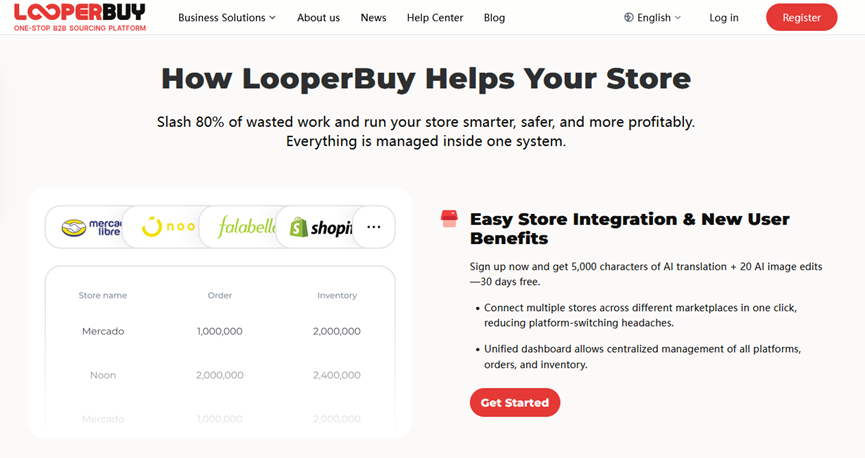
A sourcing partner such as Looperbuy can help sellers centralize supplier communication, product sourcing, quality checks, warehousing, and fulfillment coordination. This allows a merchant to spend less time managing fragmented supplier messages and more time on product positioning, customer acquisition, and brand development.
5. Test with a focused offer
Do not launch 100 unrelated products. Start with:
– One customer segment
– One core problem
– Three to eight tightly related products
– One hero product
– One or two logical bundles
– Clear delivery expectations
– A simple return and support policy
This approach produces cleaner data and makes it easier to understand why people buy—or why they do not.
Build a Store Around Trust, Not Just Trends
A profitable Shopify dropshipping store in 2026 should feel like a specialist retailer, not a catalogue of random products. That means each product page should answer the questions buyers ask before they ask them.
Include:
– Clear product photos from multiple angles
– Real dimensions and material details
– Use-case demonstrations
– Shipping timelines by destination
– Compatibility information
– Care instructions
– Warranty or replacement policy where applicable
– Honest limitations
– Customer-service contact details
– Frequently asked questions
The goal is not simply to create a sale. It is to reduce uncertainty. Lower uncertainty often leads to better conversion rates, fewer disputes, and stronger repeat-purchase potential.
Start Your Niche Store With Looperbuy
The best Shopify dropshipping niches are built on a simple formula: choose a specific customer problem, test demand carefully, source products that meet clear quality standards, and create an offer that is easier to trust than a generic marketplace listing.
Looperbuy can support this model by helping global B2B sellers source Chinese products, manage product procurement, arrange fulfillment, and reduce the need to hold large amounts of inventory. Instead of tying up cash in warehousing and complicated logistics coordination, sellers can focus their resources on building a differentiated customer experience.
Ready to test a profitable niche without overstocking? Explore Looperbuy’s product sourcing and dropshipping fulfillment solutions, then begin with a focused product collection built for one clearly defined customer need.
Frequently Asked Questions
1. What is the best Shopify dropshipping niche for beginners?
For beginners, lightweight and non-regulated categories are often the most practical. Home organization, pet accessories, coffee accessories, desk products, and creator tools are generally easier to source, ship, bundle, and explain than medical, cosmetic, or bulky products.
2. How many products should a new dropshipping store launch with?
A focused store can launch effectively with three to eight related products. Start with one hero product, then add supporting accessories and bundles. This is usually more effective than launching dozens of unrelated products.
3. Are high-ticket products better for dropshipping?
Not always. High-ticket products can produce more revenue per order, but they often involve higher shipping fees, more complicated returns, damage risk, and greater customer expectations. Sellers should calculate margins after all operating costs rather than choosing products based only on selling price.
4. How can I avoid choosing a short-lived viral product?
Look for products that solve recurring problems, have stable search interest, support accessories or repeat purchases, and receive consistent customer discussion beyond a single viral video. Review long-term Google Trends data, customer reviews, marketplace listings, and social-media content before committing.
5. Can I sell beauty devices through dropshipping?
Yes, but the category requires extra care. You should verify supplier documentation, electrical safety requirements, product claims, battery-shipping conditions, and return procedures. For a lower-risk entry point, begin with non-electrical beauty accessories and storage products.
6. Why is supplier verification so important for dropshipping?
The supplier affects product quality, packaging, inventory accuracy, delivery time, customer satisfaction, refunds, and reviews. Even strong advertising cannot protect a store from repeated fulfillment failures or poor-quality products.
7. How does Looperbuy help B2B sellers reduce inventory risk?
Looperbuy can help sellers source Chinese products and coordinate dropshipping fulfillment, reducing the need to purchase and store large quantities of inventory before product demand is proven. This gives merchants more flexibility to test products, manage costs, and scale successful collections.
References
1. Doba. “[10 Best Shopify Dropshipping Niches for 2026 Profit].”
2. McKinsey & Company. “[The Trends Defining the $1.8 Trillion Global Wellness Market in 2024].”
3. U.S. Census Bureau. “[Older Adults Outnumber Children in 11 States and Nearly Half of Counties].”
4. Global Wellness Institute. “[2024 Global Wellness Economy Monitor].”
5. U.S. Census Bureau. “[Older Population and Aging].”
6. Shopify. “[What to Sell Online in 2026].”