Table of Contents
Understanding SATA Data Cables and Their Compatibility
Introduction to SATA Technology
Serial ATA (SATA) technology represents a significant advancement in computer storage connectivity, serving as the primary interface standard for connecting storage devices to motherboards. Since its introduction in 2003, SATA has become the predominant standard in consumer computing, revolutionizing how we connect storage devices to our computers. The technology marked a significant departure from its predecessor, Parallel ATA (PATA), by offering improved performance, better cable management, and enhanced reliability. The shift from parallel to serial data transmission proved to be a game-changing innovation in the computer hardware industry.
The Universal Nature of SATA Data Cables
SATA data cables indeed follow a universal design standard, making them compatible across different devices and generations. This universality is one of the key features that has contributed to SATA’s widespread adoption in the computing industry. The standardized design ensures that any SATA data cable can connect any SATA-compatible storage device to any motherboard with SATA ports. This universal compatibility has significantly simplified the process of building and upgrading computers, making it more accessible to both professionals and enthusiasts. The standardization extends beyond just physical compatibility to include electrical specifications and data transmission protocols.
Technical Specifications and Standards
Physical Design Characteristics
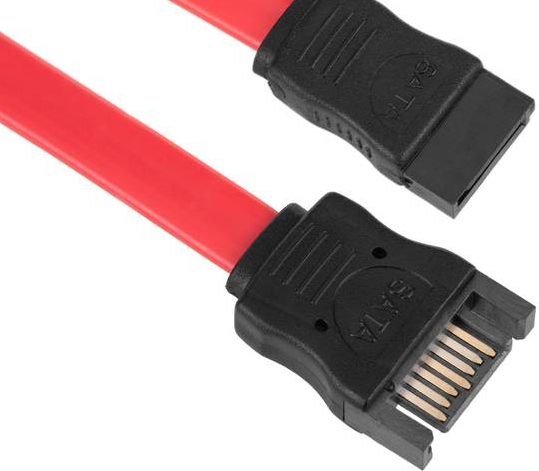
The physical design of SATA data cables incorporates several key features that ensure their universal compatibility. Each SATA data cable features a distinctive 7-pin connector design, with the pins arranged in a specific configuration that allows for proper data transmission. The cable’s design includes built-in keying features that prevent incorrect insertion, ensuring foolproof connections every time. The connectors are designed with L-shaped keys that make it impossible to insert them incorrectly, preventing potential damage to both the cable and the connected devices. Additionally, the slim profile of SATA cables contributes to better airflow within computer cases compared to the older ribbon cables used by PATA.
SATA Generations and Speed Capabilities
Throughout its evolution, SATA technology has progressed through several generations, each offering increased data transfer speeds. The remarkable aspect of SATA data cables is that they maintain backward and forward compatibility across all generations. This means that a SATA data cable can work with any SATA generation device, from SATA I through SATA III and beyond. SATA I operates at 1.5 Gbps, SATA II at 3.0 Gbps, and SATA III at 6.0 Gbps. Despite these different speeds, the physical cable remains the same, with the actual transfer rate being determined by the capabilities of the connected devices and motherboard.
Practical Applications and Usage
Storage Device Compatibility
SATA data cables demonstrate their universal nature through their ability to connect various storage devices. Whether connecting traditional hard disk drives (HDDs), solid-state drives (SSDs), or optical drives, the same SATA data cable can handle all these connections without any modifications or special requirements. This versatility extends to different drive capacities and form factors, from compact 2.5-inch drives to standard 3.5-inch units. The universal compatibility also applies to various manufacturers’ products, ensuring that users can mix and match components without compatibility concerns.
System Building and Upgrades
The universal nature of SATA data cables significantly simplifies system building and upgrade processes. Computer builders and enthusiasts can use any standard SATA data cable to connect their storage devices, regardless of the manufacturer or generation of their components. This standardization has made it easier for users to upgrade their storage systems incrementally, adding or replacing drives as needed without worrying about cable compatibility. The hot-swap capability of SATA also allows for drive changes without powering down the system, though this feature depends on motherboard and operating system support.
Important Considerations
Cable Quality and Performance
While SATA data cables are universal in terms of compatibility, the quality of the cable can impact overall system performance. High-quality cables with proper shielding ensure reliable data transmission and can better maintain signal integrity, especially in systems with multiple drives or longer cable runs. Premium cables often feature better insulation and electromagnetic interference (EMI) protection, which can be crucial in systems with multiple high-speed components. The construction quality also affects the cable’s durability and longevity, with better-made cables being more resistant to wear and tear from repeated connections and disconnections.
Length Limitations and Installation
SATA data cables typically come in various lengths, but it’s important to note that there are practical limitations to maintain optimal performance. The standard recommendation suggests keeping cable lengths under one meter to ensure reliable data transmission and minimize signal degradation. Longer cables may experience signal attenuation and increased electromagnetic interference, potentially leading to data transfer errors or reduced performance. Proper cable routing and management within the computer case are also crucial for maintaining good airflow and preventing physical stress on the connectors.
Future Prospects and Evolution
Continued Relevance
Despite the emergence of newer technologies like NVMe, SATA data cables continue to maintain their relevance in modern computing. Their universal compatibility and reliable performance ensure their continued use in various computing applications. The cost-effectiveness and widespread availability of SATA devices make them an attractive option for many users, particularly for bulk storage solutions. The technology’s maturity also means it benefits from excellent software support and driver stability across all major operating systems.
Adaptation to New Technologies
The universal design of SATA data cables has proven adaptable to technological advances, supporting increasing data transfer speeds while maintaining backward compatibility with older devices. This adaptability extends to emerging storage technologies and form factors, with SATA protocols being adapted for various specialized applications. The industry continues to develop new implementations of SATA technology while maintaining the fundamental compatibility that makes it so valuable.
Common Questions and Answers
Q1: Can I use any SATA data cable with any SATA device?
A: Yes, SATA data cables are designed to be universally compatible with all SATA devices, regardless of the generation or manufacturer. This universal compatibility is ensured through strict adherence to industry standards and specifications, making it possible to connect any SATA storage device to any SATA-enabled motherboard using any standard SATA data cable.
Q2: Do different SATA generations require different cables?
A: No, SATA data cables are standardized across all generations. The same cable can work with SATA I, II, and III devices, though the transfer speed will be determined by the slowest component in the chain. This backward and forward compatibility is one of the key advantages of the SATA standard, ensuring that users don’t need to replace cables when upgrading components.
Q3: Are there any differences between SATA data cables for HDDs and SSDs?
A: No, SATA data cables are identical for both HDDs and SSDs. The same cable can be used interchangeably between these different storage types. This uniformity extends to all SATA-compatible storage devices, including optical drives and hybrid drives, making system configuration and upgrades straightforward.
Q4: What is the maximum length for a SATA data cable?
A: The recommended maximum length for SATA data cables is one meter (approximately 39 inches) to ensure optimal performance and signal integrity. While longer cables exist, they may introduce signal degradation and reliability issues, particularly in high-performance systems or environments with significant electromagnetic interference.
Q5: Can SATA data cables affect transfer speeds?
A: While SATA data cables themselves don’t limit transfer speeds, poor quality cables or those exceeding the recommended length might experience signal degradation, potentially affecting performance. Factors such as cable shielding, construction quality, and proper installation all play roles in maintaining optimal data transfer speeds and reliability. Using high-quality cables and following proper installation practices can help ensure the best possible performance from your SATA devices.
How To Purchase:https://looperbuy.com/search?keywords=SATA+data+cables