Learn how to dropship from AliExpress with a practical guide to supplier checks, product testing, pricing, shipping, and returns. Discover when a China sourcing partner like Looperbuy may fit your business, and build a fulfillment process around verified costs and realistic customer expectations.
Learning how to dropship from AliExpress is straightforward: choose products, list them in your store, and ask suppliers to ship orders directly to customers. Building a dependable business requires more discipline. You need reliable products, realistic delivery promises, clear return procedures, and margins that survive the full cost of fulfillment.
My approach is to treat AliExpress as a product-discovery channel—not a substitute for a sourcing strategy. Start small, verify what customers will receive, and strengthen your supply chain before increasing sales.
This guide explains how to evaluate AliExpress dropshipping suppliers, calculate sustainable prices, manage cross-border orders, and decide when a dedicated China sourcing partner makes more sense.
Table of Contents
What Is AliExpress Dropshipping?
AliExpress dropshipping is a fulfillment model in which you sell products without holding the inventory yourself. After receiving a customer order, you purchase the item from an AliExpress seller and provide the delivery address. The seller ships it directly to your customer.
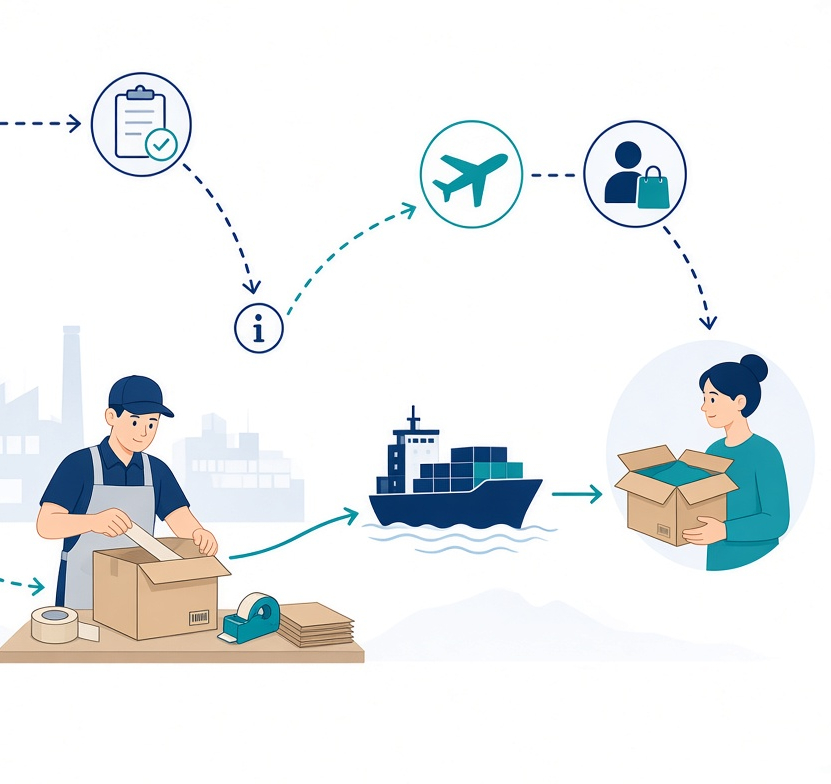
The basic workflow is:
1. Select a product and evaluate its supplier.
2. Create your own product listing.
3. Receive payment from your customer.
4. Purchase the correct product variant.
5. Submit the customer’s shipping details.
6. Monitor fulfillment and resolve delivery problems.
You remain the customer-facing seller. That means your store needs its own delivery policy, support process, and refund arrangements.
Also, distinguish marketplace prices from negotiated wholesale prices. An inexpensive listing is not automatically a wholesale agreement or a dependable long-term supply arrangement.
Step 1: Choose Products You Can Evaluate and Support
Start with a Customer Problem
Instead of asking, “Which product is trending?”, ask, “What practical problem can my store solve?”
A narrowly defined customer need makes product selection and messaging easier. Consider desk organization for small workspaces or compact storage for frequent travelers.
Evaluate each product against five questions:
– Can customers understand its purpose immediately?
– Can you verify its materials, dimensions, and performance?
– Is it economical to ship to your target market?
– Can you explain its limitations honestly?
– Would a refund or replacement erase the profit?
My preference is to begin with products whose quality can be checked through straightforward inspection, rather than products requiring specialized technical assessment.
Screen for Compliance and Intellectual Property Risks
Do not assume a product is suitable for sale simply because it appears on AliExpress.
For U.S. sales, the Consumer Product Safety Commission provides guidance for online sellers, importers, and other businesses. Requirements depend on the product category; selling recalled products is illegal.
Before listing, investigate applicable safety requirements, labeling, supporting documentation, and intellectual property permissions. For unfamiliar or regulated categories, obtain qualified advice.
Avoid branded merchandise unless you can establish authorization and authenticity. A supplier’s reassurance should not replace documentation.
Step 2: Vet AliExpress Dropshipping Suppliers Before Launch
While seller ratings serve as a useful screening metric, they cannot address every operational issue. I recommend expanding the process of reviewing seller ratings and order volumes into a formal supplier evaluation.
Use a Supplier Verification Checklist
| Area | What to verify | Why it matters |
| Product consistency | Exact materials, dimensions, variants, and sample quality | Reduces discrepancies between listing and delivery |
| Dispatch | Handling time and stock availability | Supports realistic shipping promises |
| Packaging | Protection, inserts, invoices, and branding | Helps prevent damage and customer confusion |
| Tracking | Carrier, first scan, and destination coverage | Makes delivery problems easier to investigate |
| After-sales support | Evidence requirements and replacement procedure | Clarifies responsibility before disputes arise |
Ask specific questions rather than requesting a general promise of “good service.”
For example:
> “For this exact variant shipped to my target country, what is the current handling time, which shipping method is used, and what happens if the customer receives a damaged item?”
Keep written answers with the product record.
Order Samples Through the Intended Shipping Route
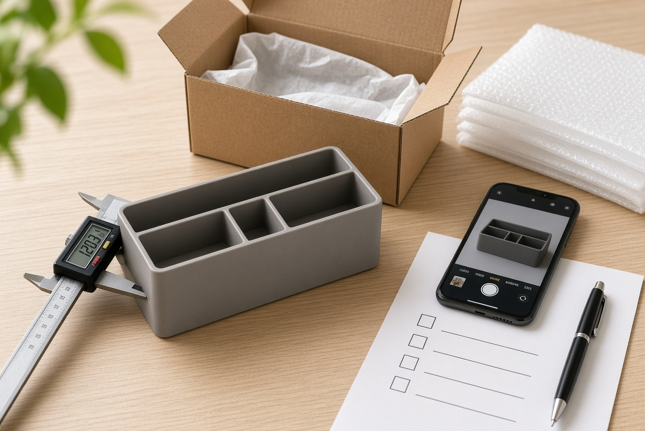
A sample should test more than the item itself. Use the shipping method you expect customers to receive.
Record:
– Time between payment and dispatch.
– Time until the first meaningful tracking event.
– Total delivery time.
– Packaging condition.
– Accuracy of color, size, materials, and accessories.
– Supplier response to follow-up questions.
Photograph the sample and retain the order details. One successful delivery does not prove long-term consistency, but it provides a better starting point than listing photographs alone.
Step 3: Calculate Profit Beyond the Product Price
The general recommendation is to set the price at least twice the purchase cost. While this serves as a preliminary rule of thumb, it cannot determine profitability when factors such as shipping, advertising, payment processing fees, and customer service costs vary.
I would prioritize contribution: the amount left from each order after its variable costs.
Build a Complete Per-Order Calculation
Use this framework:
Contribution per order = selling price − product cost − shipping − seller-borne import charges − payment fees − advertising cost − expected refund and replacement cost.
The following example is hypothetical, not a Looperbuy quotation or an industry benchmark.
| Item | Illustrative amount |
| Customer selling price | $35.00 |
| Product purchase | $10.00 |
| Shipping | $5.00 |
| Seller-borne import and clearance costs | $3.00 |
| Payment processing | $1.50 |
| Customer acquisition | $8.00 |
| Refund and replacement allowance | $2.00 |
| Contribution before fixed expenses | $5.50 |
A $35 sale produces $5.50 before subscriptions, salaries, and other fixed expenses under these assumptions.
This is why a low purchase price is not enough. Compare products using their complete cost structure.
Stress-Test Your Pricing
Before launch, recalculate your margin under less favorable conditions:
– Advertising becomes more expensive.
– The supplier raises its price.
– Shipping costs increase.
– More orders require replacement.
– A discount reduces the selling price.
Set a minimum acceptable contribution and pause products that fall below it. Treat this as an internal operating rule, not a universal benchmark.
Step 4: Verify Shipping Times and Import Costs
Separate Dispatch from Delivery
Dispatch time is the period before a supplier hands over the parcel. Transit time follows that handover. Customs processing and final-mile delivery introduce additional uncertainty.
AliExpress provides a general shipping timeframe, but this should not be treated as a guarantee for your store. You still need to verify the current estimated delivery time based on the specific product, shipping service, and destination.
My recommendation is to:
1. Check destination-specific options.
2. Test the intended shipping method.
3. Record dispatch and delivery separately.
4. Build estimates from observed results.
5. Review performance as order volume grows.
Show delivery information near the purchase decision, not only in a policy page.
Include U.S. Customs Changes in Your Cost Review
CBP states that duty-free de minimis treatment was suspended for covered shipments from all countries effective August 29, 2025. Covered imports valued at $800 or less are no longer automatically eligible for that exemption and may incur applicable duties, taxes, and fees.
Do not build a pricing model around the assumption that inexpensive parcels always enter the United States duty-free.
Before choosing a shipping arrangement, establish:
– Who handles import clearance.
– Who pays duties and other charges.
– Whether the quoted shipping price includes those charges.
– What information the carrier needs.
– What happens if the recipient refuses payment.
Confirm current requirements for your goods and shipping route rather than applying one tariff estimate to every order.
Step 5: Create Product Pages That Prevent Disappointment
Rewrite supplier descriptions around verified customer needs.
Include:
– Accurate dimensions and materials.
– Variant and compatibility details.
– Package contents.
– Usage instructions.
– Important limitations.
– Delivery estimates.
– Return and support information.
For a storage product, explain usable dimensions—not just external measurements. For an accessory, name the compatible models you have verified.
Original sample photographs can show scale, packaging, and details missing from supplier images.
The goal is not to make every product sound exceptional. It is to help customers understand what they will receive.
Step 6: Build an Order and Returns Procedure
Check Orders Before Submission
Use a short pre-fulfillment checklist:
1. Confirm product, variant, and quantity.
2. Validate the delivery address.
3. Recheck stock, price, and shipping availability.
4. Submit fulfillment instructions.
5. Save the supplier order reference.
6. Monitor tracking and investigate exceptions.
If you use automation, test variant mapping and order transfer before relying on it. A successful import does not necessarily prove that every customer order will reach the correct supplier.
Keep Customer Refunds Separate from Supplier Recovery
AliExpress return benefits are conditional. Its published terms link availability to participating products, countries, sellers, and the information shown on the relevant product or order page. Do not assume every item has identical free-return coverage.
Define your own process for damaged products, incorrect items, missing deliveries, and change-of-mind requests.
Specify what evidence you need, where approved returns go, and who pays return shipping. Then separately pursue any supplier reimbursement available.
For U.S. customer orders, the FTC requires a reasonable basis for advertised shipment timing. If no timeframe is stated, the general rule is shipment within 30 days. When shipment cannot occur on time, sellers must follow applicable delay-consent and refund requirements. This concerns shipment timing, not a blanket 30-day delivery guarantee.
When Should You Consider a China Sourcing Partner?
AliExpress can help you explore products. As your operation grows, coordinating individual sellers may become harder to manage.
Consider reviewing your sourcing approach when:
– Quality varies across repeat orders.
– Multiple suppliers create inconsistent fulfillment.
– Packaging requirements become more specific.
– Customer support consumes too much time.
– Total landed costs become difficult to compare.
Looperbuy focuses on China product sourcing and direct fulfillment for global business sellers. Its stated purpose is to help merchants reduce the burden of inventory, warehousing, payment coordination, and logistics management.
Evaluate a sourcing partner against your actual requirements. Request clear information about product availability, quality checks, shipping options, charges, and after-sales responsibility. Do not assume every service is included.
Discuss Your Next Product with Looperbuy
Share your target product, destination countries, expected order volume, and delivery requirements with Looperbuy. Request a sourcing and fulfillment assessment, then compare the proposed total costs and responsibilities against your existing AliExpress workflow.
Frequently Asked Questions
1. Can Beginners Start Dropshipping from AliExpress?
Yes. Its direct-to-customer fulfillment model offers a practical starting point. However, beginners still need to verify suppliers, test products, calculate costs, and establish customer-service procedures before launching.
2. Do I Need to Buy Inventory Upfront?
The basic model does not require stocking every product before selling it. You should still budget for samples, supplier payments, marketing, refunds, and operating expenses. Inventory-free does not mean cost-free.
3. How Long Does AliExpress Dropshipping Take?
There is no reliable universal delivery time. The source article gives broad ranges, but product availability, handling, destination, shipping method, and customs all matter. Use current route-specific information and test orders when setting expectations.
4. Does AliExpress Offer Free Returns on Every Product?
No. Published terms restrict benefits to eligible products and applicable conditions. Review the specific product and order information before making a return promise to your customer.
5. Can I Use AliExpress to Fulfill eBay Orders?
Do not assume this workflow is permitted. eBay distinguishes approved wholesale-supplier arrangements from buying through another retailer or marketplace after receiving an order. Verify that your sourcing arrangement complies with its policy before listing.
6. Is Looperbuy Automatically Cheaper Than AliExpress?
Not necessarily. Compare equivalent products using total fulfillment costs, packaging requirements, delivery arrangements, and after-sales responsibility. A sourcing decision should reflect your operating needs, not an unsupported assumption that one channel is always cheaper.
Referencs
– Doba, “How to Dropship from AliExpress”[doba]
– U.S. Customs and Border Protection, “Suspending Duty-Free De Minimis Treatment for All Countries.”[help.cbp]
– Federal Trade Commission, “Mail, Internet, or Telephone Order Merchandise Rule.”[ftc]
– Federal Trade Commission, “Business Guide to the FTC’s Mail, Internet, or Telephone Order Merchandise Rule.”[ftc]
– U.S. Consumer Product Safety Commission, “Online Sellers’ Safety Guide” and “Online Sellers Safety Guide FAQs.”[cpsc]
– AliExpress, “‘Free Returns,’ ‘Free Shipping’ and ‘Fast Delivery’ Terms and Conditions.”[cdn.contract.alibaba]
– eBay Export, “Drop shipping.”[export.ebay]