Compare dropshipping websites vs supplier marketplaces for reliability, sourcing control, product quality, shipping, and B2B scalability. Learn how to verify suppliers, test fulfillment, reduce inventory risk, and build a dependable China sourcing workflow with Looperbuy.
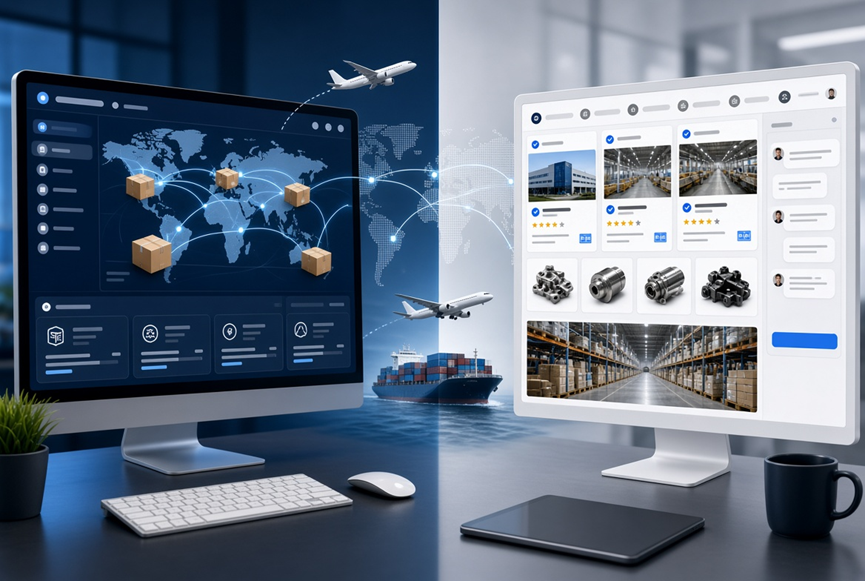
Supplier marketplaces are usually more reliable for product discovery and supplier comparison, while dedicated dropshipping websites can be more reliable for fulfillment only when they provide verified stock, clear service-level commitments, transparent pricing, and proven delivery performance. For B2B sellers, the most dependable model is rarely “marketplace versus dropshipping website” in isolation—it is a sourcing workflow that validates the supplier, tests the product, and monitors fulfillment performance over time.
For global merchants that want to sell without purchasing inventory upfront, dropshipping websites and supplier marketplaces both offer a route to China sourcing and direct-to-customer fulfillment. However, they create different operational risks. A seller may save money on storage and avoid tying up cash in slow-moving inventory, but they also place product quality, dispatch speed, packaging, and delivery accuracy in another company’s hands.
That is why reliability should be measured, not assumed. A polished supplier profile, attractive product photos, or a low unit price does not prove that a supplier can consistently fulfill customer orders. Reliable ecommerce sourcing depends on verified supplier identity, product quality control, inventory visibility, shipping data, support responsiveness, and a workable resolution process when something goes wrong.
Table of Contents
What Is the Difference Between Dropshipping Websites and Supplier Marketplaces?
A dropshipping website is typically a service or platform designed to help merchants sell products without holding stock. The platform, supplier, or fulfillment partner receives order details and ships goods directly to the end customer.
A supplier marketplace is a broader B2B sourcing environment where buyers can search for products, compare vendors, request quotations, negotiate terms, order samples, and potentially arrange wholesale, private-label, or dropshipping fulfillment.
The distinction matters because the two models solve different problems.
| Comparison Area | Dropshipping Websites | Supplier Marketplaces |
| Main purpose | Simplify direct-to-customer order fulfillment | Help buyers find, compare, and negotiate with suppliers |
| Supplier selection | Often curated or limited by the platform | Usually broad, with many factories, trading companies, and distributors |
| Speed to launch | Often faster for new sellers | May take longer because vetting and negotiation are required |
| Product control | Can be limited if listings are imported quickly | Greater potential for customization and supplier communication |
| Inventory visibility | Depends on integration quality and update frequency | Often varies by supplier and may require manual confirmation |
| Branding options | May support basic packaging or inserts | Better potential for OEM, ODM, private label, and custom packaging |
| Fulfillment management | Often centralized or automated | May require a third-party agent or direct supplier coordination |
| Reliability risk | Platform dependency and hidden fulfillment variability | Supplier-quality variability and more buyer due diligence |
| Best for | Testing products and low-complexity sales | Building long-term sourcing relationships and differentiated product lines |
In practical terms, dropshipping websites optimize convenience, while supplier marketplaces optimize supplier access and sourcing flexibility.
Neither model automatically protects a seller from stockouts, quality variation, delayed dispatch, unexpected fees, or poor customer communication. The seller still owns the customer relationship. If the parcel arrives late, the item differs from the listing, or the return process fails, the customer usually holds the merchant—not the supplier—responsible.
Reliability Means More Than Fast Shipping
Many sellers evaluate reliability using one question: “Can this supplier ship quickly?” That matters, but it is incomplete.
A supplier can dispatch a package rapidly and still be unreliable if the item has inconsistent quality, the SKU is wrong, the tracking number does not receive a carrier scan, or the final delivered product does not match the product page.
A stronger definition of dropshipping reliability includes six connected factors:
1. Supplier legitimacy
The business identity, address, payment recipient, factory or trading role, and relevant certifications can be verified.
2. Product consistency
The product received by customers matches the stated material, dimensions, color, performance, packaging, and intended use.
3. Inventory accuracy
The seller can identify whether an item is actually available before accepting a customer order.
4. Fulfillment performance
Orders are processed, packed, dispatched, and delivered within the stated time window.
5. Communication and issue handling
The supplier or platform responds quickly to order exceptions, damaged goods, missing parcels, and return requests.
6. Commercial transparency
Product price, shipping fees, handling charges, minimum order requirements, duties, packaging costs, and refund rules are stated clearly before the seller commits.
Salesforce identifies consistent product quality, accurate inventory data, and timely fulfillment as central characteristics of a reliable dropshipping supplier. It also recommends that merchants order samples and examine supplier background, service processes, and return policies before scaling.
For a B2B seller, this means reliability should be treated as an operational scorecard, not a marketing claim.
Are Dropshipping Websites More Reliable?
Dropshipping websites can be highly effective when a seller needs a simple workflow: import a product, receive an order, send it to a fulfillment partner, and provide tracking to the customer.
Their main advantage is operational convenience.
Where dropshipping websites perform well
A well-managed dropshipping platform may offer:
– Automated order routing that reduces manual data entry.
– Centralized tracking across multiple carriers and destinations.
– Product catalog integration for faster storefront setup.
– Inventory synchronization that can reduce overselling.
– Standardized shipping methods and shipping-price rules.
– One account manager or support channel instead of dozens of individual factory contacts.
– Consolidated sourcing and fulfillment for merchants selling multiple product categories.
For first-time sellers, this can reduce the complexity of managing supplier communication, order exports, and international shipping coordination. It can also help small ecommerce teams test a product category before investing in bulk inventory.
The U.S. ecommerce market continues to grow, increasing the commercial importance of reliable order fulfillment. U.S. retail ecommerce sales reached an estimated $340.2 billion in the second quarter of 2026, up 12.2% from the same quarter a year earlier, and represented 17.1% of total retail sales on a seasonally adjusted basis. In a growing market, slow fulfillment and inaccurate product claims can quickly harm customer reviews, repeat purchases, and advertising efficiency.
Where dropshipping websites create risk
The weakness of some dropshipping websites is that the merchant may not know who actually fulfills the order.
A platform can look professional while still relying on a changing network of suppliers, warehouses, and carriers. If the platform does not disclose inventory locations, processing times, product sourcing standards, or refund responsibility, the merchant may struggle to control customer experience.
Common risks include:
– Catalog-first selling: Products are listed before samples are inspected.
– Weak supplier transparency: The real manufacturer, warehouse, or payment recipient may be unclear.
– Inaccurate stock synchronization: A product appears available but cannot be shipped.
– Unclear processing times: “Fast shipping” may describe transit only, not picking and dispatch.
– Limited differentiation: Many sellers may import the same product descriptions and images.
– Restricted branding: Custom packaging, inserts, bundles, and quality checks may be unavailable.
– Unclear dispute handling: Sellers may have no defined remedy for lost parcels, defects, or supplier errors.
A dropshipping website is therefore reliable only when its operational claims can be verified with evidence—not merely because it offers one-click product imports.
Are Supplier Marketplaces More Reliable?
Supplier marketplaces can offer more supplier choices, deeper sourcing information, and better opportunities to compare alternatives. For merchants selling specialized, customized, regulated, or higher-value products, that flexibility can be valuable.
However, a large marketplace is not the same as a verified supplier relationship.
Where supplier marketplaces perform well
Supplier marketplaces can be more reliable for sellers who need to investigate several manufacturers before selecting one. They can help merchants:
– Compare product specifications across multiple suppliers.
– Review factory profiles, certifications, transaction history, and customer feedback.
– Request quotations based on quantity, customization, destination, and packaging needs.
– Order samples from more than one supplier.
– Negotiate private-label, OEM, or ODM capabilities.
– Identify backup suppliers for business continuity.
– Build direct relationships with factories or export-oriented trading companies.
For B2B sellers, a marketplace often provides better long-term strategic value because it helps them move beyond commodity listings. Instead of competing only on price, the seller can develop better packaging, product bundles, materials, colors, instructions, branding, and quality requirements.
Where supplier marketplaces create risk
A marketplace reduces search friction, but it does not eliminate supplier due diligence.
Some listings may be outdated. Some “manufacturers” may be intermediaries. A supplier may have strong messaging before payment but weak after-sales support. Product photos can be copied. Certifications can be irrelevant to the exact item or destination market. A low price can exclude packaging, inspection, freight, duties, or transaction fees.
The buyer must also manage more of the process:
– Supplier communication.
– Quote comparison.
– Product specifications.
– Sample approval.
– Quality inspection.
– Payment terms.
– Shipping method selection.
– Returns and defect-resolution rules.
This is where a sourcing and fulfillment partner can add value. A service such as Looperbuy can help B2B merchants source China-made products, coordinate purchasing, consolidate orders, manage fulfillment, and arrange direct shipping—allowing sellers to reduce upfront inventory, storage, payment, and logistics-management burden while preserving more control than a purely catalog-driven dropshipping approach.
The Reliability Test: A Better Way to Choose
The most useful question is not “Which platform is best?” It is:
> Can this supplier or fulfillment partner prove that it can deliver the exact product, to the target destination, under the terms I plan to promise my customers?
Use the following five-step framework before publishing a new product.
1. Verify the supplier identity
Ask for the company’s legal name, business address, primary contact, website, payment recipient, product catalog, and role in the supply chain.
Confirm whether the company is:
– The factory.
– A trading company.
– An authorized distributor.
– A sourcing agent.
– A fulfillment warehouse.
– A platform connecting several suppliers.
There is nothing inherently wrong with working with a trading company or agent. The risk comes from not knowing who is responsible for quality, stock, shipping, and refunds.
2. Request an all-in landed-cost quote
Do not compare only the product price.
Request a written quote that includes:
– Unit price.
– Product variation or SKU.
– Sample fee.
– Packaging cost.
– Branding or insert cost.
– Handling fee.
– Domestic China shipping, if applicable.
– International shipping method and rate.
– Estimated processing time.
– Delivery range by destination.
– Taxes, duties, or duty-paid options.
– Refund and replacement terms.
This prevents “cheap” products from becoming unprofitable after fulfillment charges are added.
3. Order a real sample
A sample is one of the most powerful reliability checks available to an ecommerce seller.
Order the same variant, shipping method, and destination that your customers will use. Then record:
– Payment date.
– Supplier acceptance time.
– Dispatch date.
– First tracking scan.
– Delivery date.
– Product condition.
– Packaging quality.
– Product accuracy.
– Response time to a support question.
Supplier-verification guidance from Dropship.io recommends documenting supplier identity, product details, all-in pricing, handling and delivery commitments, then placing a real sample order to test whether the delivery promise matches the evidence.
4. Publish only evidence-backed promises
Your product page should reflect tested reality.
Do not publish “delivery in 5–7 days” because a supplier said it casually in chat. Do not claim premium material, exact sizing, or “high quality” unless the sample and product documentation support it.
Instead, publish:
– Accurate materials and measurements.
– Original sample photos where possible.
– A realistic destination-specific delivery range.
– Clear processing-time disclosure.
– Return conditions and costs.
– A reachable support channel.
– Product limitations where relevant.
5. Monitor live performance every week
A successful sample does not guarantee that future orders will be consistent.
Track live supplier performance using a simple scorecard:
| Reliability KPI | Why It Matters | Suggested Review Standard |
| Order acceptance time | Measures supplier responsiveness | Track daily or weekly |
| Dispatch within promised time | Shows fulfillment discipline | Compare promised vs. actual ship dates |
| First carrier scan rate | Detects false or inactive tracking | Review within 48–72 hours of dispatch |
| Delivery-time variance | Identifies unstable shipping lanes | Compare destination-level results |
| Defect or mismatch rate | Protects brand reputation | Review by SKU and supplier |
| Stockout rate | Prevents overselling | Monitor continuously |
| Supplier response time | Determines how quickly problems are resolved | Test during business hours and exceptions |
| Refund/replacement resolution | Limits customer-service losses | Document every claim outcome |
Which Model Is Best for Your Business?
The answer depends on your stage, product type, and desired level of control.
Choose a dropshipping website when:
– You want to test demand with limited upfront capital.
– You need a quick product-launch workflow.
– Your product does not require complex customization.
– The platform provides reliable stock and tracking integrations.
– You have tested the fulfillment process with real sample orders.
– You prefer centralized support and fewer supplier conversations.
Choose a supplier marketplace when:
– You need a wider range of China suppliers.
– You want to compare factories, products, specifications, and quotations.
– You plan to develop private-label or customized products.
– You need better control over packaging, branding, quality standards, and pricing.
– You are building a long-term product category rather than testing a short-term trend.
– You can invest time in supplier research and sample validation.
Use a sourcing and fulfillment partner when:
– You want supplier-marketplace choice without managing every operational detail yourself.
– You need purchasing, consolidation, inspection, storage, packaging, and shipping support.
– You sell globally and need a more organized China sourcing workflow.
– You want to reduce inventory exposure while improving fulfillment visibility.
– You need a partner that can help coordinate between suppliers and end-customer delivery.
For many growing B2B sellers, the best approach is hybrid:
1. Use a supplier marketplace to discover and compare products.
2. Validate supplier identity and request detailed quotes.
3. Order samples and inspect quality.
4. Select a dependable sourcing or fulfillment partner.
5. Launch with low inventory exposure through dropshipping or controlled fulfillment.
6. Move proven high-volume SKUs into bulk purchasing or regional warehousing when margins justify it.
Final Verdict: Reliability Comes From Control and Proof
Supplier marketplaces offer stronger sourcing depth; dropshipping websites offer stronger convenience. But neither automatically delivers reliable ecommerce fulfillment.
For merchants building a sustainable global business, supplier reliability should be earned through verification. Test the product. Confirm the supplier. Calculate the landed cost. Validate shipping to real destinations. Track actual outcomes. Publish only customer promises that your operational data can support.
Looperbuy can be particularly relevant for B2B sellers that want to source products from China, avoid excessive inventory and warehousing costs, and simplify purchasing and international fulfillment management. The goal is not simply to find cheaper products. It is to create a sourcing system that protects margins, supports accurate delivery promises, and gives customers a consistent experience.
Ready to build a more reliable China sourcing and dropshipping workflow? Contact Looperbuy to discuss product sourcing, supplier coordination, order fulfillment, and global shipping solutions tailored to your B2B business.
Frequently Asked Questions
1. Are dropshipping websites reliable for beginners?
They can be reliable for beginners if the platform has transparent supplier information, accurate inventory updates, clear processing times, sample-tested products, and defined refund support. Beginners should avoid listing untested products simply because they are easy to import.
2. Is a supplier marketplace safer than a dropshipping platform?
Not automatically. A supplier marketplace may provide more vendor choices and more sourcing data, but the buyer must still verify each supplier. Safety depends on supplier identity checks, samples, documented quotes, payment protection, and ongoing performance monitoring.
3. Should I order samples before starting dropshipping?
Yes. A real sample order helps you verify product quality, packaging, shipping time, tracking performance, and supplier support. It also gives you original product photos and more accurate information for your listings.
4. Can I dropship customized or private-label products?
Yes, but the process is usually more complex than standard catalog dropshipping. You may need to negotiate minimum order quantities, custom packaging, inserts, product labeling, quality inspection, and replenishment schedules with the supplier or a sourcing agent.
5. What is the biggest reliability risk in dropshipping?
The largest risk is making customer promises that the supplier cannot consistently fulfill. This can include inaccurate product details, false stock availability, delayed dispatch, unreliable tracking, unexpected fees, or unclear return procedures.
6. How can a sourcing agent improve dropshipping reliability?
A sourcing agent can help verify suppliers, negotiate pricing, inspect products, consolidate goods from several vendors, manage packaging, coordinate fulfillment, and communicate with suppliers when exceptions occur. This may improve control compared with working directly with many unfamiliar suppliers.
7. Should I use more than one supplier?
For important or high-volume products, having a backup supplier can reduce the impact of stockouts, production problems, price increases, or shipping disruptions. However, each supplier should be separately tested to ensure consistent product quality and customer experience.
References
1. U.S. Census Bureau. “[Quarterly Retail E-Commerce Sales Report].”
2. Salesforce. “[The Best Dropshipping Suppliers for Small Businesses].”
3. Dropship.io. “[Dropshipping Scams: How Sellers Avoid Costly Mistakes].”