Discover the best dropshipping products to sell in 2026, from pet accessories and home organization to beauty tools and tech. Learn how to validate demand, calculate landed cost, verify China suppliers, reduce inventory risk, and build a more reliable global fulfillment workflow with Looperbuy.
Choosing the best dropshipping products in 2026 is not about copying a viral product list. The most reliable opportunities come from matching real customer demand with products that have manageable shipping costs, low damage risk, clear value, and suppliers that can deliver consistently.
For global B2B sellers, China sourcing and dropshipping can reduce the financial burden of buying inventory upfront, operating warehouses, coordinating multiple factory payments, and handling international fulfillment alone. With a structured product-validation process, sellers can test categories, learn from order data, and scale only the products that prove commercially viable.
> Key takeaway: A “winning” dropshipping product is not simply popular. It must also be profitable after shipping, reliable in quality, suitable for its destination market, and easy to explain to a clearly defined customer.
Table of Contents
What Makes a Product Worth Dropshipping?
Many sellers start with product trends. That can be useful, but it is incomplete. A product may generate attention on social media while still being a poor operational choice because it is too fragile, too heavy, difficult to ship, highly regulated, or prone to returns.
From a sourcing perspective, a strong dropshipping product should pass four tests:
1. Demand: Buyers are actively searching for it or have a recurring problem it solves.
2. Margin: The retail price leaves room for product cost, packaging, shipping, taxes, transaction fees, advertising, refunds, and customer support.
3. Fulfillment suitability: The product is compact, durable, and practical to ship internationally.
4. Supplier reliability: A supplier can consistently meet the agreed product, packaging, quality, and delivery requirements.
Looperbuy’s dropshipping guidance highlights several useful starting filters: seek products with relatively high demand, adequate profit potential, compact shipping characteristics, and low breakage risk. It also notes that sellers should check samples, reviews, supplier records, and quality information rather than relying solely on a listing photo.
A practical product-screening checklist
Before adding any item to your store, ask:
– Does this product solve a specific problem or improve a familiar activity?
– Is demand stable for at least several months rather than driven by a one-week trend?
– Can I clearly identify the buyer and buying situation?
– Is the product small, light, durable, and straightforward to package?
– Does the landed cost allow a sustainable margin?
– Is it likely to create repeat purchases, bundles, or complementary sales?
– Does it require certifications, safety documents, special labeling, or restricted shipping?
– Can I order a sample and create a written quality checklist?
– Can the supplier provide clear answers about materials, lead time, customization, and packaging?
A product does not need to satisfy every condition perfectly. However, the more risks you accept at launch, the more carefully you must test before increasing order volume.
Best Dropshipping Product Categories for 2026
1. Home Organization, Kitchen, and Practical Living Products
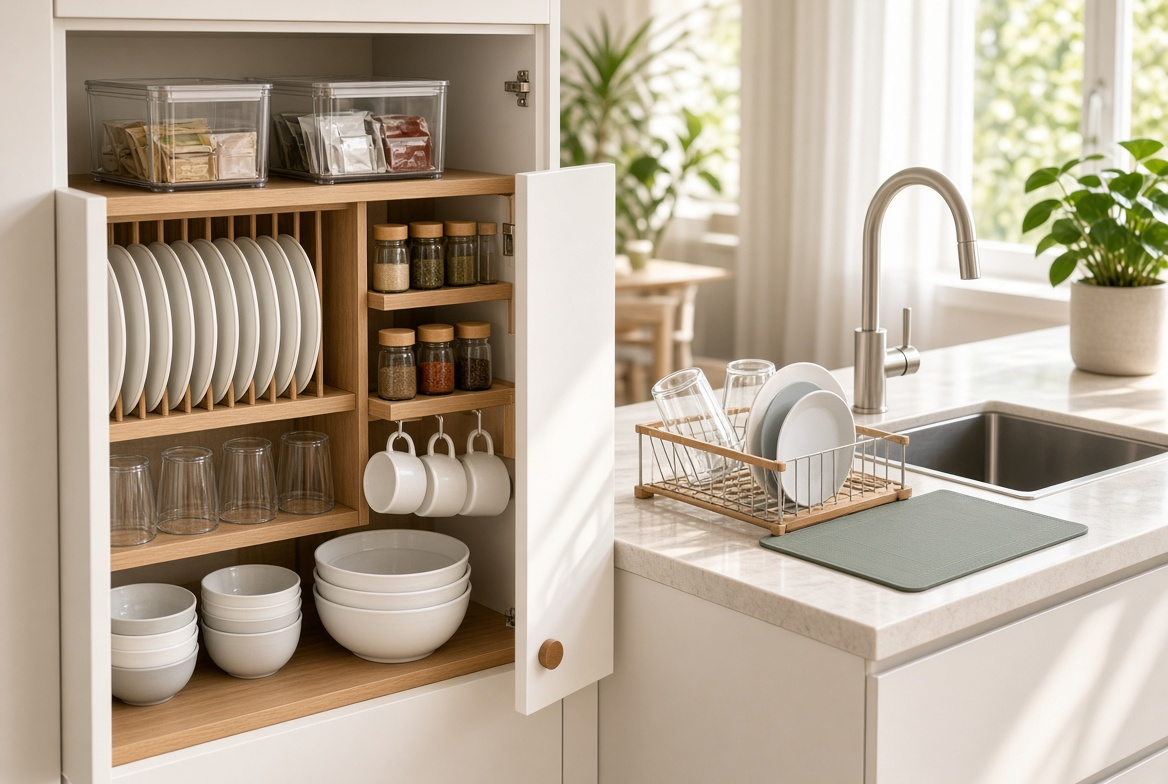
Home products can perform well because they often solve visible, everyday problems: limited storage, cluttered kitchens, inefficient cleaning routines, or uncomfortable living spaces.
Examples include:
– Wall-mounted dish racks
– Cabinet organizers
– Drawer dividers
– Reusable silicone baking mats
– Compact storage containers
– Under-sink organizers
– Foldable laundry baskets
– Solar garden lights
– Desk and cable-management accessories
– Portable cooling and ventilation accessories
However, sellers should distinguish between “trend appeal” and “shipping practicality.” Large appliances, bulky furniture, and oversized refrigeration units can lead to high shipping costs, a risk of damage, complex return processes, and customer dissatisfaction. Consequently, in many cases, compact accessories offer a more manageable entry point than large, high-priced home appliances.
Best positioning angle: Focus on the problem solved. Instead of listing “Kitchen Storage Organizer,” describe the use case: “Create more usable cabinet space in small kitchens.”
2. Pet Accessories and Everyday Pet-Care Products
Pet products remain attractive because owners often buy emotionally, seek convenience, and make repeat purchases. The strongest products combine comfort, safety, hygiene, enrichment, or travel convenience.
Potential products include:
– Orthopedic pet beds
– Pet grooming gloves
– Portable pet water bottles
– Interactive cat toys
– Pet water fountains
– Pet travel bowls
– Car seat covers for dogs
– Cat scratcher accessories
– Raincoats for dogs
– Slow-feeding bowls
The opportunity is not simply to sell generic pet products. It is to build a focused assortment around a customer identity. For example, a store targeting apartment-dwelling cat owners needs different products, photos, bundles, and product descriptions than a store targeting outdoor dog owners.
Product bundle example
A “Weekend Dog Travel Kit” could include:
– Collapsible water bowl
– Portable water bottle
– Lightweight raincoat
– Seat-belt safety clip
– Waste-bag holder
Bundles can improve average order value while helping customers make a faster buying decision.
Caution: Avoid unsupported health claims. If a pet product claims to treat pain, anxiety, disease, or a medical condition, verify the product’s documentation and comply with the target market’s regulations before publishing those claims.
3. Beauty Tools and Personal-Care Accessories
Beauty and personal-care accessories offer strong visual merchandising potential. Customers can quickly understand the use case when products are shown through demonstrations, routines, and lifestyle content.
Potential products include:
– Face ice rollers
– Scalp massagers
– Makeup brush-cleaning tools
– Cosmetic storage organizers
– Gua sha tools
– Reusable makeup-removal pads
– Heatless hair-curler sets
– Travel toiletry kits
– LED beauty accessories
– Facial cleansing tools
For sellers, the key difference is product compliance. Beauty tools and accessories may be simpler to source than cosmetics or medical-style devices. Products that make therapeutic, dermatological, electrical, or medical claims can carry additional safety, labeling, certification, and advertising requirements.
A safer initial approach: Begin with non-medicated accessories and clear usage instructions. Order samples to test durability, materials, packaging, user comfort, and appearance under real lighting.
4. Outdoor, Travel, and Camping Accessories
Outdoor products are often easier to sell when they are lightweight, useful, and tied to a specific activity. Customers do not just buy an object; they buy preparedness, convenience, and confidence while traveling, hiking, camping, or spending time outdoors.
High-potential examples include:
– Collapsible water bottles
– Compact camping stoves
– Waterproof picnic blankets
– Solar-powered phone chargers
– Portable lanterns
– Travel compression bags
– Lightweight dry bags
– Foldable camping stools
– Hiking waist packs
– Insulated thermal bottles
Products in this category should be evaluated carefully for battery requirements, weight, weather resistance, safety instructions, and shipping restrictions. Electronics with lithium batteries may require specialized shipping methods, while camping stoves may involve fuel-related restrictions depending on the product design and destination.
Best positioning angle: Sell around a specific scenario, such as “camping for beginners,” “weekend road trips,” “festival essentials,” or “hiking with dogs.”
5. Fitness, Recovery, and At-Home Exercise Accessories
Home fitness remains a useful category, particularly when products are compact and easy to demonstrate. The best products tend to support a repeatable habit such as stretching, mobility work, home workouts, recovery, or active commuting.
Potential products include:
– Resistance bands
– Smart jump ropes
– Yoga blocks
– Pilates rings
– Compact massage tools
– Foam rollers
– Portable workout mats
– Grip-strength trainers
– Running belts
– Sports backpacks
Large fitness equipment can be expensive to ship and difficult to return. Sellers may find more practical early opportunities in accessories: compact bands, lightweight recovery tools, workout storage products, and travel-friendly gear.
6. Mobile, Desk, and Everyday Tech Accessories
Technology accessories can create demand because consumers use phones, laptops, tablets, and portable devices every day. Yet this category requires stronger supplier checks because defects, compatibility failures, and unsupported charging claims can quickly create refunds.
Potential products include:
– Wireless charging stations
– Phone stands
– Cable-management kits
– Portable phone projectors
– Mini photo printers
– Phone stabilizer gimbals
– Bluetooth sleep headbands
– Laptop stands
– Keyboard-cleaning kits
– Travel power organizers
When sourcing electronic goods, confirm:
– Plug type and voltage compatibility
– Battery specifications
– Charging standards
– Safety certifications required by the target market
– Packaging and user manual language
– Warranty handling process
– Defect and replacement policy
– Shipping limitations for battery-powered goods
Do not rely on supplier marketing claims alone. Request documentation and test the exact version you plan to sell.
Compare Product Categories Before You Source
| Product category | Why buyers purchase | Main sourcing advantage | Key risk to manage | Best early-stage product type |
| Home organization | Convenience and space-saving | Broad customer appeal and easy bundling | Bulky products can erase margin | Compact storage and kitchen accessories |
| Pet accessories | Comfort, care, and emotional buying | Repeat-purchase and bundle potential | Safety and durability concerns | Grooming, travel, and enrichment items |
| Beauty tools | Self-care and visual appeal | Strong demonstration content | Compliance and unsupported claims | Non-medicated accessories |
| Outdoor gear | Preparedness and activity-based buying | Seasonal campaigns and practical benefits | Weight, batteries, and weather performance | Lightweight travel accessories |
| Fitness accessories | Habit-building and recovery | Easy to demonstrate in video | Oversized equipment and return cost | Bands, mobility, and recovery tools |
| Tech accessories | Daily device use and convenience | Wide audience and clear utility | Defects, compatibility, certification | Stands, organizers, and non-battery accessories |
How to Validate a Dropshipping Product Before Scaling
The biggest mistake in dropshipping is treating product discovery as a one-time decision. Product selection should be a controlled process where each stage reduces uncertainty.
Step 1: Start with a buyer problem
Do not begin with “What product is trending?” Begin with:
– What frustrates my target buyer?
– What task do they want to complete faster?
– What hobby or lifestyle do they care about?
– What purchase would make their daily routine easier?
– What complementary products could be sold together?
For example, rather than launching a general outdoor store, build a clear buyer-focused concept: portable gear for urban weekend campers.
Step 2: Calculate true landed cost
The factory price is only one part of profitability. A realistic landed-cost calculation should include:
Landed Cost=Product Cost+Domestic Handling+Packaging+International Shipping+Duties/Taxes+Payment Fees
Then account for advertising, marketplace commissions, customer support, returns, replacements, and discounts.
A $6 product is not necessarily profitable at a $24 selling price if it costs $9 to ship, generates high ad spend, and is frequently returned.
Step 3: Request a sample
A sample is your first quality-control tool. Evaluate it against a written checklist:
– Dimensions and weight
– Materials and finish
– Color consistency
– Functionality
– Packaging strength
– Product instructions
– Labeling
– Branding placement
– Accuracy versus listing photos
– Potential breakage points
Looperbuy recommends product samples, supplier reviews, quality inspection reports, supplier reputation checks, supply-capacity assessment, delivery-speed review, and after-sales evaluation when assessing dropshipping products and suppliers.
Step 4: Test with a limited launch
Start with a small number of products and a controlled buyer segment. Monitor:
– Product-page conversion rate
– Customer questions before purchase
– Shipping time
– Delivery success rate
– Damage and defect rate
– Refund rate
– Review sentiment
– Profit after fulfillment
– Repeat-purchase potential
The goal of early testing is not immediate scale. It is learning which products create profitable, repeatable customer satisfaction.
Step 5: Improve the winner
Once a product performs consistently, strengthen the offer:
– Negotiate better supplier pricing
– Improve packaging
– Add branded inserts
– Create bundles
– Offer multiple colors or sizes
– Build an instruction guide
– Add product demonstration content
– Consider limited inventory for faster fulfillment
– Develop complementary products
A lean supply chain is not about avoiding inventory forever. It is about making inventory a deliberate decision after demand is proven.
Why China Sourcing Matters for B2B Sellers
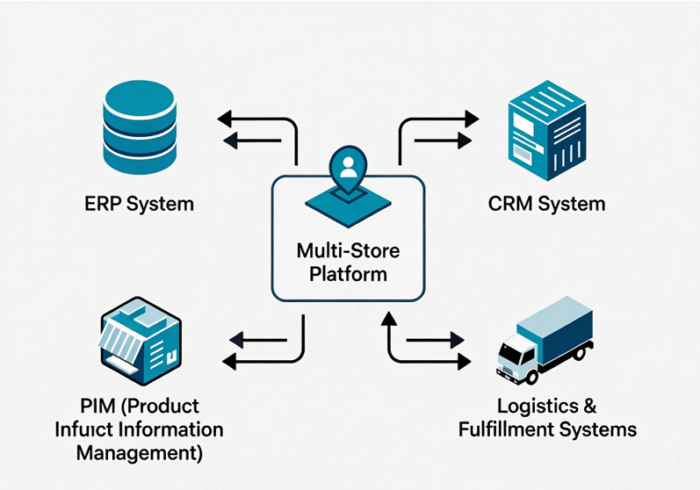
A sourcing partner can help centralize several operational tasks that otherwise require sellers to coordinate factories, freight providers, payment systems, warehouses, and customer-order processing independently.
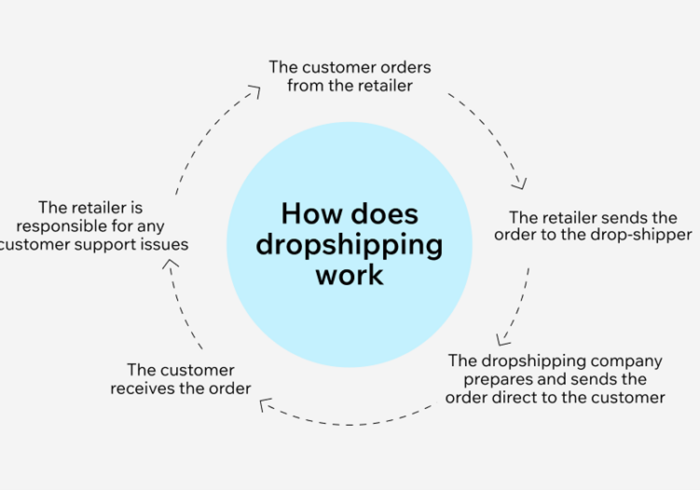
Looperbuy describes its model as inventory-free dropshipping, where sellers can source Chinese products, synchronize customer orders to suppliers, and have suppliers fulfill orders directly to customers. Its platform also states that it supports sourcing through Chinese factories, multi-currency payment options, global logistics services, and supplier/product evaluation processes.
For B2B sellers, the practical value lies in reducing operational fragmentation:
– Fewer supplier communication gaps
– More structured product sourcing
– Lower initial inventory exposure
– Simplified cross-border fulfillment workflows
– Better ability to test multiple products
– More time to focus on sales channels and customer relationships
However, no platform removes the need for commercial judgment. Sellers must still verify product claims, establish quality standards, understand destination-market rules, and communicate accurate delivery expectations to customers.
Build a More Reliable Product Pipeline With Looperbuy
The best dropshipping products are not discovered once and copied forever. They are researched, sampled, tested, measured, improved, and scaled through disciplined sourcing decisions.
If you are building a global B2B product catalog, Looperbuy can help you explore Chinese products, reduce inventory pressure, coordinate sourcing, and simplify fulfillment workflows. Start with a focused product brief, test a manageable group of items, and use real order data to decide what deserves further investment.
Ready to find products without carrying unnecessary inventory? Use Looperbuy to source, test, and fulfill your next B2B product opportunity from China.
Frequently Asked Questions
1. What are the best dropshipping products to sell in 2026?
The best products usually solve a clear problem, have stable demand, leave adequate room for fulfillment costs, and can be shipped reliably. Strong categories include home organization, pet accessories, beauty tools, outdoor gear, fitness accessories, and practical tech accessories.
2. How do I know whether a dropshipping product is profitable?
Calculate the full landed cost, not only the factory price. Include product cost, domestic handling, packaging, international shipping, taxes or duties, payment fees, advertising, marketplace fees, customer service, refunds, and expected return costs.
3. Should I choose trending products for dropshipping?
Trends can be useful for generating ideas, but they should not be the only selection criterion. Stable demand, clear buyer needs, practical fulfillment, and supplier reliability often create more durable opportunities than short-lived viral products.
4. What products should beginners avoid in dropshipping?
New sellers should be cautious with oversized, fragile, highly regulated, safety-sensitive, low-margin, or battery-restricted products. Products with complicated sizing, expensive returns, or unclear quality standards can also create costly problems.
5. Why should I order a product sample before selling it?
A sample allows you to verify quality, materials, dimensions, packaging, usability, color accuracy, and supplier consistency. It also gives you original product photos and a stronger basis for writing accurate product descriptions.
6. Can dropshipping work for B2B sellers?
Yes. B2B sellers can use dropshipping and lower-commitment sourcing to test products, build smaller catalog experiments, validate target markets, and reduce inventory exposure before committing to larger purchase orders.
7. Is China sourcing only suitable for low-cost products?
No. China sourcing can support a wide range of products and price points. The right choice depends on supplier capability, quality requirements, customization needs, compliance, shipping economics, and the level of service your customers expect.
References
1. [Doba, “Best-Selling Dropshipping Products in 2025”]
2. [Looperbuy, “China Dropshipping Supplier & Fulfillment Service”]