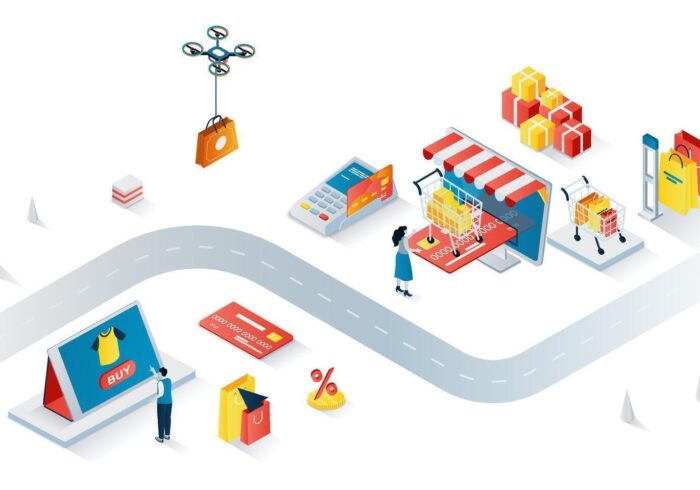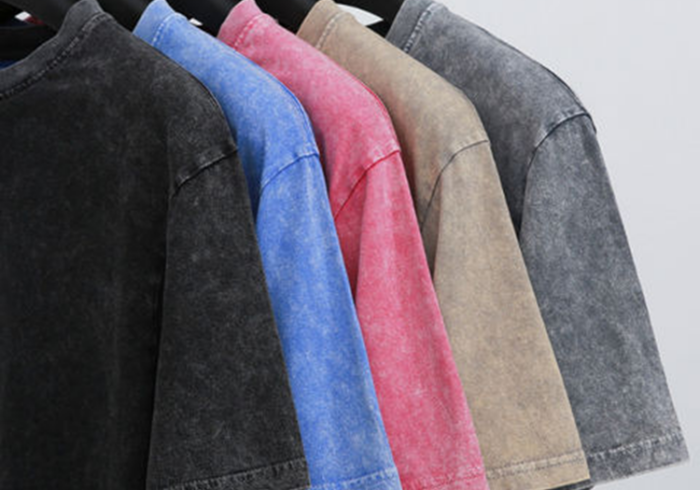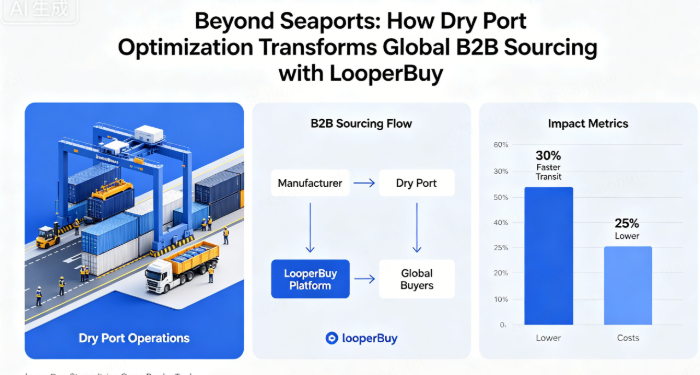
China’s manufacturing ecosystem remains the backbone of global supply chains, yet the path from factory floor to overseas warehouse is rarely straightforward. For brand owners, wholesalers, and producers, the challenge is not finding Chinese products—it is sourcing them efficiently, affordably, and with confidence. This is where the convergence of MCN-driven retail models and one-stop B2B sourcing platforms like LooperBuy is reshaping how global businesses access Chinese goods.
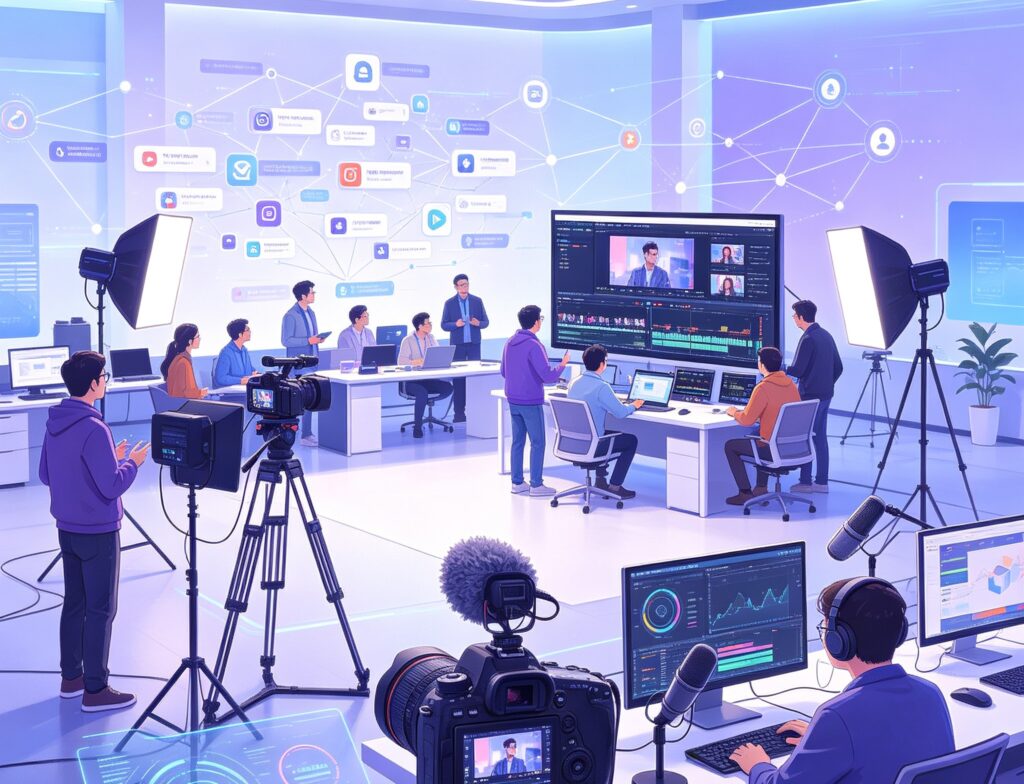
Table of Contents
The Hidden Cost of Multi-Category Sourcing Coordination
Sourcing across multiple product categories from China offers undeniable advantages: access to specialized manufacturers, greater product variety, and the flexibility to expand catalogs without rebuilding entire supply chains . But the operational reality often diverges sharply from the strategic promise.
Consider a buyer managing fifty SKUs across home goods, outdoor accessories, and pet products. If each SKU generates just one ten-minute clarification per week over an eight-week production cycle, the buyer spends roughly 67 hours on coordination alone—before factoring in quote revisions, sample approvals, production delays, or freight negotiations . That hidden time cost rarely appears in unit price calculations, yet it frequently determines whether a sourcing program succeeds or collapses under its own administrative weight.
A one-stop B2B sourcing platform absorbs this coordination burden. Instead of managing dozens of disconnected factory conversations, buyers review prepared quotes, sample status updates, quality evidence, and consolidated logistics plans through a single interface . The buyer retains control over product direction and commercial decisions; the platform handles China-side execution.
Why MCN Models Are Reshaping B2B Distribution
The MCN (Multi-Channel Network) concept originated in digital content, where agencies manage multiple creators and monetize audiences across platforms . That model is now migrating into B2B commerce with significant implications for sourcing.
In the new retail ecosystem, MCN companies function as intermediaries between content creators, brands, and e-commerce platforms. They integrate content marketing, traffic monetization, brand building, and supply chain management into a single operational layer . For B2B buyers, this creates both opportunity and complexity. Opportunity lies in the reach: MCN networks can amplify product visibility across multiple channels simultaneously. Complexity arises because MCN-driven demand is volatile—products that trend one week may be obsolete the next.
One-stop sourcing platforms complement MCN models by providing the supply-side stability that content-driven demand requires. When a product goes viral through an MCN channel, the sourcing partner must be able to scale production, maintain quality, and coordinate logistics without breaking the buyer’s cost structure. Platforms like LooperBuy, which connect directly to 1688.com‘s supplier network, offer this scalability through established factory relationships and consolidated logistics .
Navigating Risk in China Sourcing: What Experienced Buyers Know
The enthusiasm for China sourcing is tempered by well-documented risks. The EU SME Centre continues to receive weekly reports from European businesses encountering significant issues with Chinese suppliers—defective goods, non-shipments, and vanished advance payments .
A Croatian company ordered UV/LED lamps worth roughly 20,000 EUR. The lamps failed within days of use by the company’s own clients. A Bulgarian buyer purchased 70,000 EUR of granite that arrived with thickness deviations from the contract; the seller refused to recognize an independent laboratory report . These cases share common red flags: sellers without verifiable business licenses, demands for advance T/T payments, or bank accounts that do not match the company name .
Experienced sourcing partners mitigate these risks through verification layers. A legitimate one-stop platform should provide business license verification, factory audit coordination, and inspection services before goods leave China . According to ISO 2859-1 acceptance sampling standards, inspection decisions should be structured through defined defect categories—critical, major, minor, cosmetic, functional, and packaging-related—with clear rules for hold, rework, or release . Without such structured decision rules, inspection reports become anecdotal rather than actionable.
The Portfolio Control Layer: Managing SKUs as Strategic Assets
Effective multi-category sourcing requires treating the product portfolio as a managed system rather than a collection of independent purchases. This means establishing a control record for every SKU that tracks priority level, target price, sample status, packaging status, quality risk, delivery date, and open decisions .
Not every SKU deserves equal attention. Hero products, regulated items, and private-label goods with fixed launch dates should receive earlier sampling and stronger quality controls than low-risk add-ons . If every SKU is treated identically, sourcing teams waste effort on low-risk details while high-value products drift toward production pressure.
Exception management is where the real work lives. One sample needs correction; one product misses its target price; one packaging file arrives late; one carton mark changes. These exceptions are manageable individually but become overwhelming when multiplied across a diverse product range . A one-stop sourcing partner manages these exceptions through a single procurement rhythm, ensuring that one delayed component does not cascade into a missed shipment.
What Global Buyers Should Verify Before Committing
Before selecting a one-stop B2B sourcing platform, buyers should conduct a structured evaluation. The following checklist distills critical verification points from industry practice:
- Business license validation: Request the supplier’s official business license with company stamp. Cross-reference registration information against China’s government enterprise credit system .
- Defect decision rules: Ask how quality issues are categorized and what thresholds trigger hold, rework, or rejection. A platform that cannot articulate these rules is not managing quality systematically .
- Corrective action verification: When defects are found, demand evidence of correction—updated photos, inspection notes, or final report data—not verbal assurances from the factory .
- Documentation consistency: Invoice, packing list, carton marks, and actual goods should describe the same product story before cargo leaves the factory. Mismatches create customs delays and receiving headaches .
- Payment infrastructure: For international buyers, the ability to pay in foreign currency without requiring a Chinese bank account or RMB conversion eliminates a major operational barrier .
Practical Steps for Launching a Multi-Category Sourcing Program
Step 1: Define priorities. Rank each SKU as core, support, test, or optional. Core products need stronger sample approval and release evidence; optional items should not delay the shipment .
Step 2: Consolidate supplier communication. Rather than managing multiple factory contacts, route all communication through a single sourcing partner who coordinates quotes, samples, production updates, and inspections.
Step 3: Establish an evidence rhythm. Require regular production updates with photos, inspection criteria confirmations, and carton mark reviews before shipment release .
Step 4: Plan logistics as part of procurement, not after it. Consolidation plans should be built into the buying process, not added at the last minute. Platforms that integrate freight coordination with sourcing eliminate the gap between production completion and shipment .
Step 5: Test before scaling. Start with a limited order to evaluate the platform’s communication responsiveness, documentation quality, and problem-solving behavior under real production conditions.
Why One-Stop Platforms Are Becoming Essential Infrastructure
The global B2B procurement landscape is shifting decisively toward digital platforms. Amazon Business reports a nearly 30 percent year-over-year increase in selection scale, with industrial MRO products, repair tools, and commercial furniture among the fastest-growing categories . China’s highly efficient industrial clusters remain unmatched in their ability to serve this demand—but only for buyers equipped with the operational infrastructure to navigate them.
LooperBuy’s model addresses the specific pain points that have historically kept smaller international buyers out of the China sourcing market: the inability to register on domestic platforms, payment barriers requiring RMB and Chinese bank accounts, and the burden of coordinating freight across multiple providers . By connecting directly to 1688.com‘s supplier network and partnering with global payment infrastructure, the platform reduces the barriers that once confined China sourcing to large enterprises with dedicated procurement teams .
For brand owners and wholesalers evaluating their sourcing options, the question is no longer whether to source from China—the manufacturing base remains indispensable for countless product categories. The question is how to do so without absorbing the coordination costs, quality risks, and operational friction that have historically defined the experience. One-stop B2B sourcing platforms are emerging as the answer: not a replacement for buyer judgment, but an infrastructure layer that makes informed judgment possible at scale.
Frequently Asked Questions
What is a one-stop B2B sourcing platform?
A one-stop B2B sourcing platform provides end-to-end procurement services—product sourcing, supplier coordination, quality management, payment processing, and logistics—through a single interface, eliminating the need for buyers to manage multiple Chinese suppliers independently.
How does LooperBuy differ from traditional sourcing agents?
LooperBuy connects directly to 1688.com‘s supplier network and handles currency conversion and logistics coordination without requiring buyers to hold RMB or Chinese bank accounts . This makes China sourcing accessible to smaller international businesses that cannot meet traditional agents’ minimum order requirements.
What are the biggest risks when sourcing from China?
Common risks include defective products, non-shipment after advance payment, and quality that deviates from approved samples . Mitigation requires supplier verification, structured inspection protocols, and corrective action verification before balance payment .
Can I source products across multiple categories through one platform?
Yes. Multi-category sourcing allows buyers to work with specialized manufacturers for different products while coordinating all procurement through a single platform . The platform manages the coordination complexity that would otherwise fall on the buyer.
How does quality control work with a sourcing platform?
Reliable platforms define defect categories and decision rules based on ISO 2859-1 sampling standards . Inspections can occur at the factory or at the port before shipment, with photographic and documented evidence provided to the buyer before release.
References
- European Chamber of Commerce in China. Dealing with Supply Chain Dependencies: Challenges and Choices. December 2025.
- EU SME Centre. Simple Steps to Minimise Risks of Scams. January 2026.
- NewBuyingAgent. Multi-Category China Sourcing Agent Guide. June 2026.
- NewBuyingAgent. Reliable China Sourcing Agent: A Buyer’s 15-Point Checklist. July 2026.
- NewBuyingAgent. Multi-Category Sourcing from China. September 2026.
Article Summary
Discover how one-stop B2B sourcing platforms like LooperBuy are transforming global access to Chinese manufacturing. Learn MCN-driven distribution models, risk mitigation strategies, portfolio control frameworks, and practical steps for launching multi-category procurement programs without hidden coordination costs.
Hot tags
B2B sourcing platform China, one-stop procurement solution, LooperBuy sourcing agent, MCN e-commerce model, multi-category sourcing strategy, China supplier verification, international B2B procurement, 1688 sourcing platform, global wholesale sourcing, cross-border logistics China