Discover how B2B sellers can evaluate cheap clothing websites like SHEIN, Romwe, Zaful, Boohoo, and Fashion Nova. Learn how to validate suppliers, calculate landed costs, inspect quality, manage compliance, and build a more reliable China fashion sourcing and dropshipping workflow with Looperbuy.
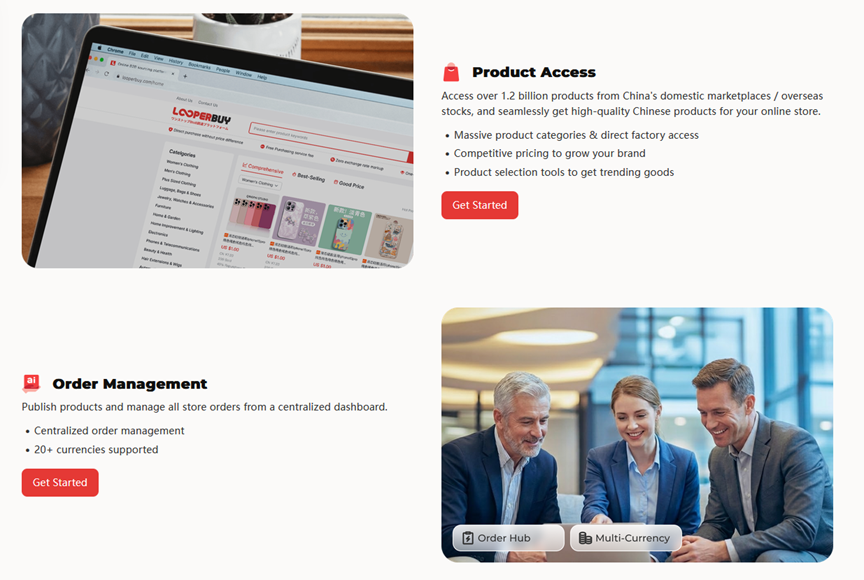
Cheap clothing websites like SHEIN have changed how fashion retailers, dropshippers, boutique owners, and online sellers discover trend-led products. However, for a B2B buyer, the real question is not simply where to find the lowest-priced clothing—it is how to source commercially viable products with dependable quality, traceable supply information, realistic delivery expectations, and manageable return risk.
Platforms such as SHEIN, Romwe, Zaful, Boohoo, Fashion Nova, PrettyLittleThing, and Forever 21 can be useful for market research, small-batch testing, and trend discovery. But they are not automatically the best long-term sourcing route for a business that needs repeatable inventory, consistent product specifications, private-label potential, or direct-to-customer fulfillment.
This guide explains how to evaluate cheap clothing websites like SHEIN from a B2B sourcing perspective, how to reduce purchasing risk, and how a China sourcing and dropshipping partner such as Looperbuy can help sellers move beyond one-off retail purchases toward a more controlled supply chain.
Table of Contents
Why Cheap Clothing Websites Like SHEIN Matter to B2B Sellers
Affordable online fashion is no longer only a consumer-shopping category. It has become a major source of inspiration and competitive pressure for online merchants worldwide. Buyers expect fast-moving styles, attractive prices, frequent new arrivals, inclusive sizing, and convenient delivery.
For B2B sellers, websites like SHEIN reveal what consumers may be searching for now: seasonal dresses, athleisure, basic tops, curve-fashion items, festival outfits, swimwear, coordinated sets, accessories, and social-media-driven micro-trends.
However, an experienced retailer should view these platforms through a different lens:
– Retail platforms are useful for trend validation
– Supplier sourcing requires deeper verification
– Low unit price does not always mean low total landed cost
– A product can sell well and still be operationally unprofitable
– Quality consistency matters more than a single successful sample order
A business that buys a viral-looking product without checking fabric composition, measurements, packaging, compliance requirements, replenishment capacity, and shipping cost may gain sales initially—but face refunds, negative reviews, chargebacks, and stock disruptions later.
Popular Cheap Clothing Sites Compared
The following websites are often mentioned by merchants looking for alternatives to SHEIN. Each can serve a different role in fashion research or inventory planning.
| Platform | Known For | Potential B2B Value | Key Risk to Check |
| SHEIN | Massive assortment, frequent new arrivals, low prices | Trend research, product testing, category discovery | Inconsistent sizing, product variation, limited sourcing control |
| Romwe | Youth-focused, casual and trend-led styles | Fashion inspiration and small-volume style testing | Delivery time and quality variation |
| Zaful | Swimwear, vacation apparel, fashion basics | Seasonal research, swimwear trend monitoring | Size consistency and fabric quality |
| Boohoo | UK-focused fast fashion, frequent promotions | Style benchmarking and rapid retail trend analysis | Durability, returns, regional fulfillment limitations |
| Fashion Nova | Curve fashion, body-conscious and social-led styles | Inclusive-size trend research and merchandising inspiration | Shipping expectations and product consistency |
| PrettyLittleThing | Occasionwear, partywear, youth fashion | Event and social-commerce trend discovery | Promotion-driven pricing may not reflect wholesale cost |
| Forever 21 | Broad mass-market apparel assortment | Basic-category and merchandising research | Not designed as a direct wholesale sourcing system |
SHEIN: Strong Trend Signal, Limited Supply-Chain Control
SHEIN remains one of the most visible names in low-cost online fashion because of its broad catalogue, rapid product turnover, and highly competitive pricing. For a merchant, it can be useful for identifying emerging silhouettes, colors, price points, and product categories.
But a retail listing is not the same as a supplier quotation.
For example, a seller may see a low-priced knitted top on a retail site and assume it can be sourced at an even lower wholesale cost. In reality, the final business cost depends on factors such as:
– Minimum order quantity
– Fabric weight and composition
– Logo, label, and packaging requirements
– Size range and grading
– Quality-inspection standards
– Carton dimensions
– Shipping destination
– Duties and taxes
– Product return rate
– Reorder availability
Expert view: Use SHEIN to study demand, not as the only foundation of your sourcing strategy. Treat it as a product-discovery tool, then validate the opportunity with suppliers that can provide clearer specifications and repeatable production.
Romwe and Zaful: Useful for Youth and Seasonal Categories
Romwe and Zaful frequently appeal to younger fashion audiences looking for inexpensive, expressive, and social-media-friendly products. Zaful is particularly associated with swimwear and vacation-oriented clothing, while Romwe offers broad casual and youth-focused selections.
These platforms can help sellers analyze:
– Festivalwear and vacationwear demand
– Graphic T-shirt concepts
– Trendy co-ord sets
– Budget swimwear categories
– Social-media-driven seasonal products
The limitation is that a B2B buyer needs more than product photos and customer ratings. Before building a product line around a similar style, request measurable specifications:
1. Fabric composition and GSM
2. Full garment measurement chart
3. Stitching and construction details
4. Colorfastness and shrinkage information
5. Size tolerance range
6. Available packaging options
7. Lead time for repeat orders
8. Inspection process before shipment
A product photo may communicate style. A specification sheet communicates whether that style can become a dependable business asset.
Boohoo, Fashion Nova, and Other Retailers
Boohoo, Fashion Nova, PrettyLittleThing, Missguided, and Forever 21 offer additional reference points for sellers targeting different customer groups. Boohoo is recognized for low-price fashion and promotions, while Fashion Nova has established a strong identity around curve-conscious, trend-driven apparel.
These sites can be especially valuable when planning a focused store rather than a broad clothing catalogue.
For instance:
– A curve-fashion retailer can analyze fit notes, size categories, and styling patterns from Fashion Nova.
– A partywear merchant can track product presentation and seasonal messaging from PrettyLittleThing.
– A basics-focused store can study merchandising structures from mass-market fashion retailers.
– A swimwear seller can compare product angles, bundle options, and seasonal timing across Zaful-style collections.
The opportunity is not to copy another retailer’s branding or product listings. The opportunity is to identify a customer need, source a differentiated product, improve the buying experience, and create a brand that customers can trust.
What B2B Buyers Should Check Before Sourcing
The biggest weakness in many “cheap clothing websites like SHEIN” articles is that they stop at website comparisons. For a seller, the more important work begins after a promising product is found.
1. Calculate Landed Cost, Not Just Product Cost
A $4 garment may look profitable if you plan to sell it for $19.99. But your actual margin depends on the total cost to get that item into a customer’s hands.
Your landed cost may include:
– Product cost
– Domestic China shipping
– Sourcing or handling fee
– Quality inspection fee
– Custom labels or packaging
– International shipping
– Duties, VAT, or import taxes where applicable
– Payment-processing cost
– Marketplace fees
– Returns and replacement allowance
A simple working formula is:
Landed Cost=Product Cost+Fulfillment Cost+Shipping Cost+Taxes/Fees+Expected Return Cost
If a $4 dress requires $1.50 in handling, $6 in shipping, $1 in duties and fees, and an average $1.20 return allowance, its working landed cost is not $4—it is $13.70.
This does not mean the product cannot be profitable. It means pricing and product selection must be based on real operating conditions rather than headline supplier prices.
2. Order Samples Before Scaling
Photos alone cannot reliably confirm quality. A sample order gives you the chance to inspect the product the way a customer would.
Evaluate:
– Fabric feel and thickness
– Transparency under normal lighting
– Color accuracy
– Fit against the size chart
– Stitching quality
– Loose threads and seam strength
– Zipper, button, and elastic performance
– Wash behavior
– Odor or residue
– Packaging condition on arrival
For fashion sellers, sample testing is one of the lowest-cost ways to prevent expensive reputation damage.
Practical rule: Do not launch a product simply because it looks good in a supplier image. Launch only after you have checked the physical product or arranged independent quality inspection.
3. Check Whether the Supplier Can Reproduce the Product
A supplier may be able to provide one sample but fail to maintain consistency across 100, 500, or 1,000 units. Before committing, ask whether the supplier can maintain the same:
– Material source
– Pattern and cut
– Size grading
– Color standard
– Hardware and trims
– Packaging format
– Production timeline
Ask for production photos, factory information where available, previous order references, and clear written specifications. When styles involve complex fabrics, prints, embroidery, sequins, or fitted silhouettes, consistency becomes even more important.
4. Understand Product Safety and Market Requirements
When selling clothing internationally, safety and compliance cannot be treated as an afterthought. Businesses placing products on the EU market must ensure that products meet applicable product-safety requirements. The EU’s Safety Gate system supports the exchange of information about dangerous non-food products and related corrective actions.
For online marketplaces, the EU General Product Safety Regulation includes obligations around product-safety processes, contact points, and the handling of dangerous-product listings.
Depending on the product and destination market, B2B sellers may need to consider:
– Fiber-content labeling
– Care-label requirements
– Country-of-origin marking
– Children’s clothing safety requirements
– Drawstring and small-part risks
– Chemical restrictions
– Flammability rules
– Packaging and recycling obligations
– Import documentation
The exact requirements vary by market and product type. A children’s hoodie, for example, may present different safety considerations than an adult cotton T-shirt. Always verify destination-market rules before importing at scale.
5. Build Responsible Sourcing Into Your Process
Price pressure is real in affordable fashion, but businesses should not ignore labor, environmental, and ethical supply-chain risks. The OECD’s garment and footwear guidance outlines a six-step due-diligence approach: embed responsible practices, identify risks, prevent or mitigate harm, track outcomes, communicate efforts, and support remediation where appropriate.
For a smaller seller, this can begin with practical actions:
– Ask suppliers about factory conditions and subcontracting
– Keep supplier records and product documentation
– Request material and compliance information
– Avoid making sustainability claims you cannot support
– Create a process for handling product complaints and safety incidents
– Review suppliers regularly instead of relying on one initial check
Responsible sourcing is not only a large-brand issue. It supports stronger customer trust, reduces operational surprises, and helps a business prepare for more demanding buyer and marketplace expectations.
A Better Sourcing Workflow for Online Sellers
Instead of buying random products from cheap clothing websites, use a repeatable sourcing workflow.
Step 1: Start With a Defined Customer
Choose a specific audience before you source products.
Examples include:
– Affordable workwear for women aged 25–40
– Plus-size occasionwear
– Modest fashion basics
– Swimwear for resort travelers
– Minimalist streetwear
– Fitness apparel for beginners
– Children’s seasonal clothing
A narrow customer focus makes it easier to choose products, create better product pages, set an appropriate price range, and develop consistent branding.
Step 2: Use Retail Platforms for Trend Research
Study cheap clothing websites like SHEIN to identify:
– Fast-rising styles
– Common price bands
– Customer review complaints
– Size and fit questions
– Product-bundle opportunities
– Seasonal categories
– Visual merchandising patterns
Read low-rated reviews as carefully as positive reviews. Complaints about thin fabric, inaccurate sizing, see-through material, or poor stitching often reveal an opportunity to sell a better version of a high-demand product.
Step 3: Source Similar Products Through Verified Channels
Once you identify an opportunity, work with suppliers that can provide direct communication, product specifications, samples, inventory confirmation, and fulfillment support.
A China sourcing and dropshipping partner can help sellers:
– Locate products from suitable suppliers
– Compare supplier quotations
– Consolidate items from multiple vendors
– Arrange sample orders
– Conduct quality checks
– Add custom packaging or branded inserts
– Store selected inventory
– Fulfill individual customer orders internationally
For Looperbuy users, this approach can reduce the need to hold large amounts of stock while giving the seller more visibility into sourcing, inspection, packaging, and delivery coordination.
Step 4: Test Small, Then Scale
Start with a controlled test rather than a large order.
Track:
– Product-page conversion rate
– Cost per acquisition
– Average order value
– Shipping time
– Customer complaints
– Return reasons
– Repeat purchase rate
– Net profit after refunds
If a product has strong demand but frequent fit-related returns, adjust the size chart, add detailed measurements, improve product photography, or choose a more consistent supplier before scaling.
Step 5: Build Differentiation Beyond Price
Competing only on price is difficult. Stronger fashion businesses create value through:
– More accurate sizing guidance
– Better product descriptions
– Original product bundles
– Faster communication
– More dependable fulfillment
– Niche-focused collections
– Better packaging
– Clear returns policies
– Authentic customer photos
– Useful styling content
The winning strategy is not necessarily to become cheaper than SHEIN. It is to become more relevant and more reliable for a defined customer group.
How Looperbuy Can Support Fashion Dropshipping
For sellers who want to source China-made apparel without taking on unnecessary inventory or logistics complexity, Looperbuy can serve as a practical sourcing and fulfillment partner.
Rather than relying only on consumer retail sites, sellers can use a structured process that includes product sourcing, supplier communication, consolidation, inspection, and cross-border shipping coordination.
A typical workflow may look like this:
1. Send Looperbuy a product link, image, specification, or sourcing request.
2. Compare available sourcing options and pricing.
3. Order samples or request product verification.
4. Confirm product details, size range, packaging, and branding needs.
5. Arrange quality inspection before dispatch.
6. Store inventory when needed or ship individual orders directly to customers.
7. Monitor shipping performance and improve the product selection over time.
This model is especially useful for sellers that want to test products without committing to large warehouse inventory. It can also help merchants consolidate products from multiple Chinese suppliers into fewer shipments, potentially simplifying operations and reducing avoidable shipping complexity.
Call to action: If you have found a high-potential fashion product on a site like SHEIN, Romwe, Zaful, or Fashion Nova, do not rely only on a retail listing. Send the link, product image, or target specification to Looperbuy and request sourcing, sampling, quality-check, and fulfillment support before you scale.
Frequently Asked Questions
1. Is SHEIN a wholesale clothing supplier?
SHEIN is primarily known as a consumer-facing online fashion retailer rather than a traditional wholesale supplier. B2B sellers may use the platform for trend research and product discovery, but should verify supply consistency, order conditions, product documentation, and commercial-use suitability before treating any retail listing as a sourcing solution.
2. What are the best cheap clothing websites like SHEIN?
Commonly mentioned alternatives include Romwe, Zaful, Boohoo, Fashion Nova, PrettyLittleThing, Missguided, and Forever 21. The best option depends on your target customer, category, destination market, required quality level, and whether you need retail purchases, trend research, or a scalable sourcing relationship.
3. How can I find clothing suppliers in China without holding inventory?
You can work with a sourcing and dropshipping partner that helps locate products, coordinate with suppliers, arrange inspection, consolidate shipments, and fulfill orders to customers. This can reduce the need to purchase and store large quantities of inventory upfront.
4. Why should I order clothing samples before selling online?
Samples allow you to check fabric quality, fit, measurements, stitching, color accuracy, packaging, and wash performance. This reduces the chance of receiving high return rates or negative reviews caused by a mismatch between product images and the actual item.
5. What should I ask a clothing supplier before placing an order?
Ask about unit price, minimum order quantity, fabric composition, measurements, size tolerances, available colors, production lead time, quality-control process, packaging options, customization capability, shipping methods, and whether the product can be reproduced consistently in future orders.
6. Are cheap fashion products always profitable for dropshipping?
No. A low product price does not guarantee profit. You must account for shipping, handling, taxes, payment fees, advertising costs, refunds, replacements, and customer-service costs. Calculate the full landed cost before deciding on your selling price.
7. Do online fashion sellers need to consider product safety?
Yes. Businesses selling into markets such as the EU must ensure products comply with applicable safety and legal requirements. Unsafe products may require corrective action or recall, and sellers should maintain product and supplier records.
References
1. [Global Sources: Top Cheap Clothing Websites Like SHEIN] — Background on affordable fashion platforms, including SHEIN, Romwe, Zaful, Boohoo, Fashion Nova, and B2B purchasing considerations.
2. [OECD: Responsible Garment and Footwear Supply Chains] — Overview of responsible business conduct and due diligence in garment and footwear supply chains.
3. [OECD: Due Diligence Guidance for Responsible Supply Chains in the Garment and Footwear Sector] — Guidance describing a risk-based approach to identifying and addressing supply-chain impacts.
4. [European Commission: Selling Products Safely in the EU] — Information on product-safety responsibilities, dangerous-product reporting, and the Safety Gate system.
5. [EUR-Lex: Regulation (EU) 2023/988 on General Product Safety] — EU product-safety requirements relevant to online marketplaces and sellers.
6. [European Parliament: Product Safety and Regulatory Compliance in E-Commerce and Non-EU Imports] — Discussion of marketplace safety obligations, compliance-by-design expectations, and challenges related to e-commerce imports.