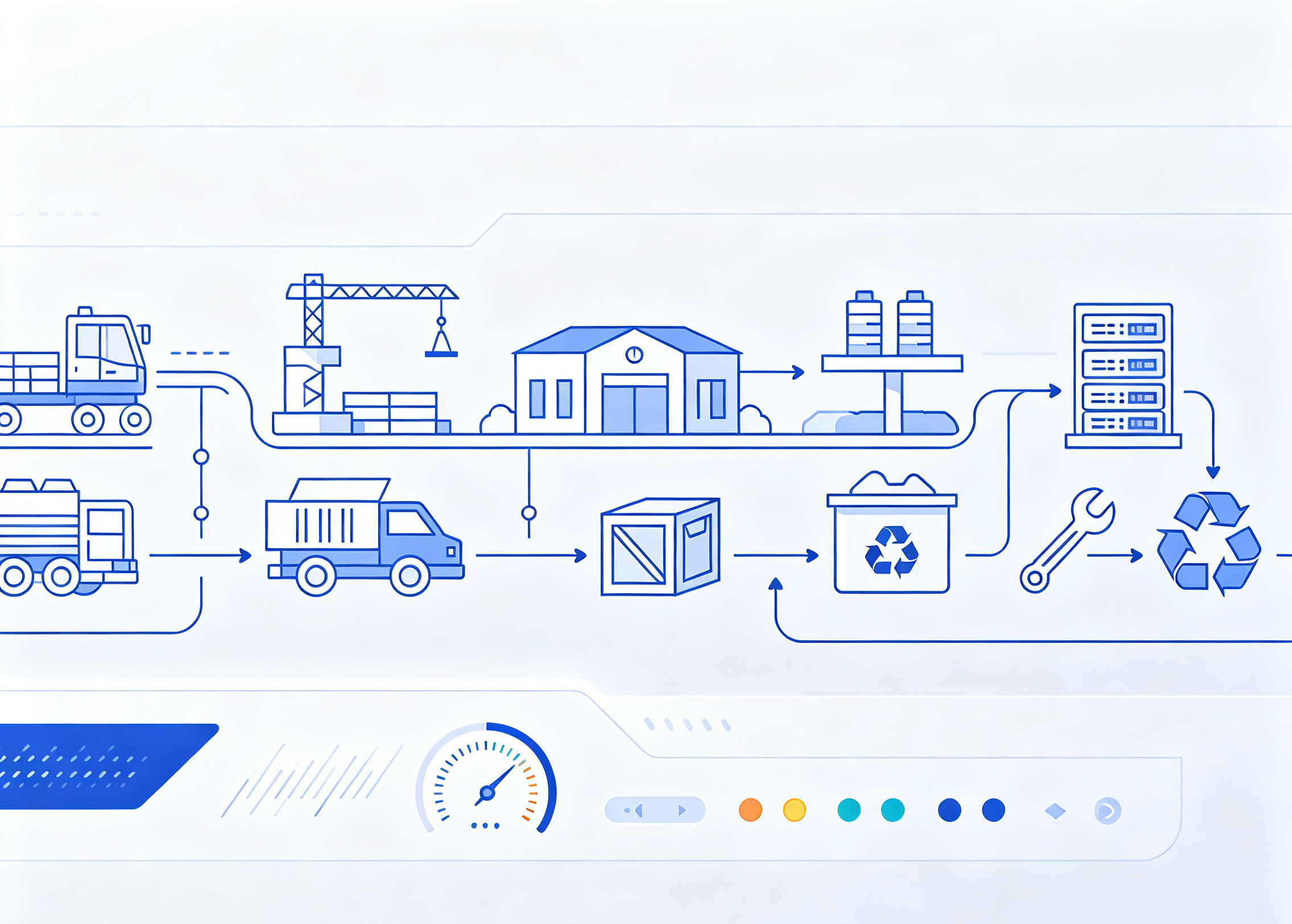
As a B2B sourcing and supply chain strategist with over 15 years of experience advising international brand owners, wholesalers, and manufacturers, I have witnessed firsthand how organizations that master asset lifecycle management best practices consistently outperform their competitors. The global sourcing landscape has evolved dramatically, and in 2026, the integration of strategic procurement with comprehensive asset lifecycle management is no longer optional—it is a competitive necessity.
What Is Asset Lifecycle Management and Why Does It Matter in 2026?
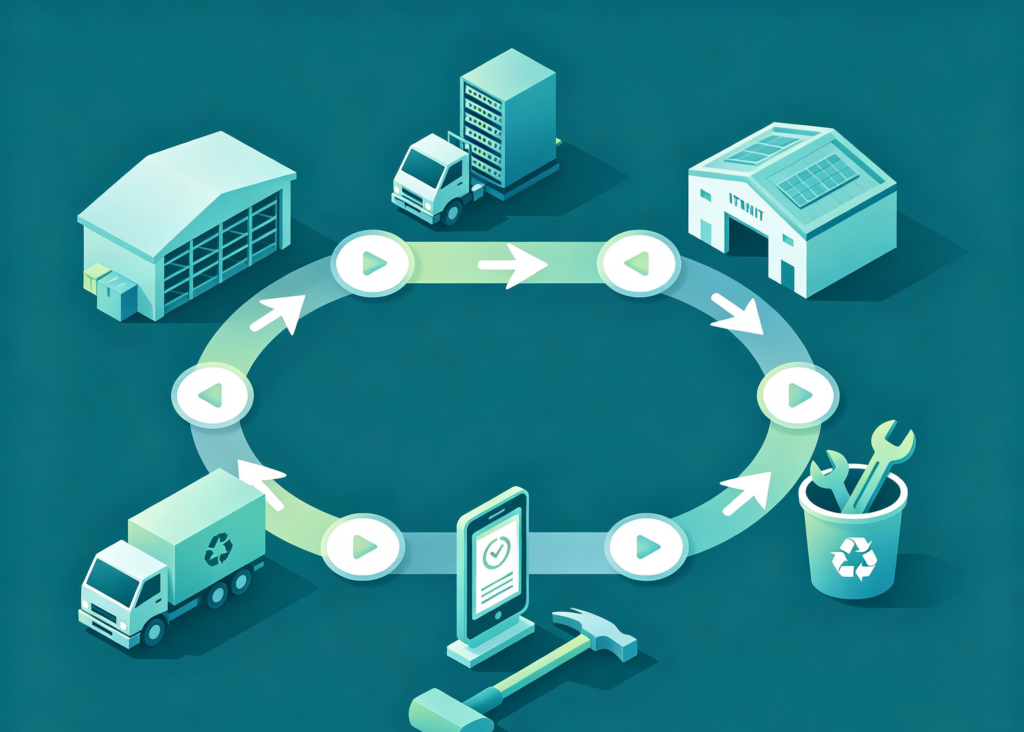
Asset lifecycle management (ALM) is a data-driven process designed to optimize equipment performance and efficiency from planning through disposal. The asset lifecycle spans four critical stages: planning, acquisition, utilization and maintenance, and disposal. According to the 2026 Asset Lifecycle Report, which surveyed 400 qualified facilities managers across the United States, organizations are evolving their approach to ALM to build long-term resilience and improve operational performance. The findings reinforce a key message: asset lifecycle management is no longer about managing short-term costs—it is about building a foundation for long-term resilience and growth.
For B2B buyers, the connection between sourcing decisions and asset lifecycle outcomes is profound. A well-executed procurement process sets the stage for lifecycle success by prioritizing scalability and lifecycle costs over short-term savings. Companies adopting ALM best practices could save up to 15% of operational expenditure (OPEX). This is where LooperBuy, a leading One-Stop B2B Sourcing Platform, transforms the procurement landscape by connecting global buyers with vetted Chinese suppliers, offering an unparalleled range of products, and delivering seamless logistics that eliminate the barriers of cross-border trade.
Stage One: Planning—Laying the Foundation for Asset Lifecycle Success
The planning stage is where the foundation of effective asset management is built—long before any equipment is purchased or contract is signed. During this phase, organizations must identify asset needs, develop acquisition strategies, and align purchases with business goals and budget constraints.
Best practices for the planning stage include:
- Conducting thorough cost-benefit analysis before acquisition decisions
- Establishing clear roles and responsibilities for asset management across procurement, deployment, maintenance, and disposal
- Developing a comprehensive asset lifecycle policy that guides all subsequent decisions
- Considering total cost of ownership (TCO) rather than focusing solely on initial purchase price
For B2B buyers sourcing from China, the planning stage requires access to comprehensive product information, vetted suppliers, and transparent pricing. LooperBuy addresses this need by providing access to 1688.com’s extensive product catalog—over 10 million products across virtually every B2B supply category. Chinese suppliers offer B2B pricing that is 25-40% lower than European or North American alternatives, delivering foundational cost advantages that enable more favorable lifecycle cost calculations.
Stage Two: Acquisition—Strategic Sourcing That Drives Long-Term Value
The acquisition phase is critical, as it sets the foundation for an asset’s entire lifecycle. During this stage, organizations procure assets through appropriate channels, ensuring correct installation and commissioning. Efficient procurement processes ensure that the right asset is acquired at the optimal cost, enhancing the overall asset management lifecycle.
Key acquisition best practices include:
- Prioritizing scalability and lifecycle costs over short-term savings
- Implementing robust tracking and monitoring systems from day one
- Verifying supplier credentials and product quality before purchase
- Planning logistics, installation, and integration with existing systems
This is where LooperBuy’s one-stop B2B sourcing model delivers exceptional value. The platform eliminates middlemen, streamlines logistics, and ensures end-to-end transparency. For brand owners, wholesalers, and manufacturers building a scalable supply chain, sourcing from China through LooperBuy delivers advantages that no other market can match. The platform’s supplier vetting framework ensures that buyers connect with legitimate, vetted suppliers—addressing one of the most persistent pain points in cross-border procurement.
Stage Three: Utilization and Maintenance—Optimizing Asset Performance
The utilization and maintenance stage focuses on ensuring assets are used efficiently and maintained properly to extend their useful life. Regular, preventive maintenance prevents unexpected breakdowns, reducing downtime and repair costs while extending asset longevity.
Critical maintenance best practices include:
- Scheduling regular preventive maintenance to avoid costly emergency repairs
- Monitoring and evaluating asset performance to make informed decisions about repairs and upgrades
- Leveraging data-driven insights to transition from reactive to predictive maintenance
- Maintaining accurate records of maintenance histories and asset conditions
The 2026 Asset Lifecycle Report reveals a significant shift toward preventive maintenance. In previous surveys, 52% of respondents reported that “one quarter to half” of their annual work orders were reacting to a breakdown or emergency repair. This year, only 22% said the same—and 35% of total respondents reported that “less than a tenth” of their annual maintenance was reactionary. Moreover, 91% of respondents said they use their current asset management system to schedule and track preventive maintenance tasks, and 88% believe that preventive maintenance routines reduce costs compared to traditional reactive methods.
For B2B buyers, the availability of quality spare parts and replacement components is essential to maintaining asset performance. LooperBuy’s diverse product range covers 90% of global B2B supply categories, from industrial components and electrical supplies to packaging materials and custom manufacturing parts. This breadth ensures that procurement professionals can source the parts they need to keep assets operational, reducing downtime and extending asset lifespans.
Stage Four: Disposal—Responsible Retirement and Value Recovery
The disposal stage marks the end of an asset’s lifecycle, covering the processes and decisions involved in retiring, recycling, or reallocating equipment responsibly. When an asset reaches the end of its lifecycle, responsible disposal or resale can recover some value and reduce environmental impact.
Disposal best practices include:
- Conducting periodic evaluations to determine whether to refurbish, upgrade, or replace an asset
- Ensuring compliance with financial reporting standards and regulations
- Recovering residual value through resale or recycling programs
- Documenting disposal decisions and maintaining audit trails
The integration of procurement and asset management systems ensures that assets don’t go missing between purchase and deployment, and that audit trails are maintained throughout the lifecycle. This integration is particularly valuable for organizations managing large, multi-location asset portfolios where visibility and control are paramount.
Digital Transformation: The Future of Asset Lifecycle Management
As asset-driven organizations prepare for 2026 and beyond, the imperative to modernize asset maintenance strategies has accelerated. Digital threads—which create a connected asset lifecycle across maintenance, planning, and operations—are emerging as interwoven data streams that make it easier for facility managers to leverage existing systems into more integrated and intelligent asset management ecosystems.
Emerging trends shaping the future of ALM include:
- AI-powered predictive maintenance and autonomous asset management
- Digital twins that enable scenario planning, risk assessment, and long-term optimization
- Integration of enterprise asset management (EAM) with procurement processes
- Sustainability reporting and compliance monitoring throughout the asset lifecycle
Organizations that approach asset maintenance, capital investment planning, and sustainability as a unified strategy—rather than siloed practices—are seeing greater efficiency, experiencing stronger financial outcomes, and making data-powered decisions. The rise of agentic AI in asset management requires clean, connected, contextual data; digital threads unify historical, real-time, and operational asset data across systems, reducing the risk of errors when AI acts autonomously.
How LooperBuy Supports Asset Lifecycle Management Best Practices
LooperBuy’s One-Stop B2B Sourcing Platform directly addresses the procurement challenges that impact every stage of the asset lifecycle:
Planning: Access to 10 million+ products across 90% of global B2B supply categories enables comprehensive planning and cost-benefit analysis. Chinese factory-direct pricing runs 4% to 15% below competing B2B platforms, providing significant cost advantages.
Acquisition: Vetted supplier networks eliminate the risk of connecting with illegitimate vendors. Integrated logistics support ensures seamless delivery to over 40 countries. Partnership with LianLian International enables foreign currency payment to Chinese suppliers in original currency denominations, solving a major cross-border payment pain point.
Utilization and Maintenance: Diverse product range ensures access to spare parts and replacement components. Global logistics network supports both bulk and small-batch B2B orders, with over 200 major ports and logistics hubs capable of shipping to every corner of the globe.
Disposal: Transparent procurement records and end-to-end visibility support compliance and audit requirements.
Conclusion: Integrating Strategic Sourcing with Asset Lifecycle Management
Asset lifecycle management best practices are essential for maximizing ROI, reducing operational costs, and building long-term organizational resilience. The integration of strategic sourcing—particularly from cost-competitive markets like China—with comprehensive ALM creates a powerful competitive advantage. As the 2026 Asset Lifecycle Report demonstrates, organizations that unify their approach to asset maintenance, capital planning, and procurement are seeing greater efficiency and stronger financial outcomes.
LooperBuy’s One-Stop B2B Sourcing Platform provides the procurement foundation that enables effective asset lifecycle management. By connecting global buyers with vetted Chinese suppliers, offering an unparalleled range of products, and delivering seamless global logistics, LooperBuy eliminates the barriers that have historically complicated cross-border procurement.
For B2B buyers committed to asset lifecycle management best practices, the question is no longer whether to source from China—but how to do it most effectively. The answer lies in partnering with a platform that combines supplier verification, product diversity, and logistics excellence into a single, transparent workflow.
Frequently Asked Questions
Q1: What are the four stages of asset lifecycle management?
The four stages of asset lifecycle management are planning, acquisition, utilization and maintenance, and disposal. Each stage plays a critical role in maximizing asset value and reducing total cost of ownership.
Q2: How much can organizations save by implementing ALM best practices?
Companies adopting ALM best practices could save up to 15% of operational expenditure (OPEX). Strategic ALM significantly reduces operating costs by anticipating maintenance needs, optimizing replacement timing, and preventing costly emergency situations.
Q3: Why is China the preferred sourcing destination for B2B buyers?
Chinese suppliers offer B2B pricing that is 25-40% lower than European or North American alternatives, thanks to mature supply chains, economies of scale, and vertical integration in key manufacturing hubs. China’s manufacturing ecosystem covers 90% of global B2B supply categories.
Q4: How does LooperBuy help with asset lifecycle management?
LooperBuy provides access to vetted Chinese suppliers, a diverse product range covering 90% of B2B supply categories, and seamless global logistics. The platform eliminates middlemen, streamlines procurement, and ensures end-to-end transparency—supporting every stage of the asset lifecycle from planning through disposal.
Q5: What digital trends are shaping the future of asset lifecycle management?
Key trends include AI-powered predictive maintenance, digital twins for scenario planning, integration of EAM with procurement processes, and sustainability reporting. Digital threads that create connected asset lifecycles across maintenance, planning, and operations are emerging as critical infrastructure for modern ALM.
References
- Siemens. (2026). Findings from the 2026 Asset Lifecycle Report. Siemens Asset Management. https://www.assetmanagement.siemens.com/en-au/blog/findings-from-the-2026-asset-lifecycle-report
- Siemens. (2026). The role of digital threads in reshaping modern asset lifecycle management. Siemens Asset Management. https://www.assetmanagement.siemens.com/en-gb/blog/the-role-of-digital-threads-in-reshaping-modern-asset-lifecycle-management
- eMaint. (2026). What Is Asset Lifecycle Management? Best Practices & Strategies. https://www.emaint.com/blog/what-is-asset-lifecycle-management
- FMIS. (2026). Optimising Asset Lifecycles: Acquisition to Disposal. https://www.fmis.co.uk/optimising-fixed-asset-lifecycles-from-acquisition-to-disposal
- Aras. (2025). What is Asset Lifecycle Management (ALM)? https://aras.com
- LooperBuy. (2026). Supplies Business: A B2B Expert’s Guide to Sourcing Chinese Goods Globally with LooperBuy. https://blog.looperbuy.com/supplies-business-a-b2b-experts-guide-to-sourcing-chinese-goods-globally-with-looperbuy.html
- 365Dropship. (2026). LooperBuy B2B Wholesale App Guide Compares Six Platforms. https://www.365dropship.com/blog/looperbuy-wholesale-app-comparison-sourcing-marketplaces
- LianLian Global. (2024). 连连国际牵手LooperBuy,解锁跨境B2B寻源新时代. https://global.lianlianpay.com
Hot Tags
B2B sourcing platform China, asset lifecycle management best practices, procurement cost reduction, global supply chain management, Chinese supplier verification, B2B wholesale sourcing, cross-border procurement logistics, enterprise asset management, strategic sourcing China, one-stop B2B platform