Agile software platforms are transforming B2B procurement and dropshipping by enabling flexible sourcing, modular logistics, and factory‑direct access to Chinese suppliers. Discover how Looperbuy helps global merchants reduce inventory risk and scale cross‑border operations with confidence.
An agile software platform is the backbone that allows modern B2B procurement and dropshipping businesses to move fast, adapt to change, and scale without losing control of their supply chain or customer experience.
Table of Contents
Why Agile Platforms Matter for Modern B2B Procurement
For global sellers sourcing from China, the difference between a static system and an agile platform is the difference between constantly firefighting and confidently scaling. Agile software platforms combine modular architecture, real‑time visibility, and collaborative workflows so procurement teams can respond quickly to market changes, supplier issues, or demand spikes. When this agility is embedded into an online B2B sourcing platform like Looperbuy, merchants gain a practical way to reduce inventory risk, simplify logistics, and grow with fewer operational headaches.
What Is an Agile Software Platform?
At its core, an agile software platform is a suite of technology tools designed around iterative development, continuous feedback, and rapid adaptation to change. Instead of one monolithic system, it typically uses modular components with minimal dependencies, allowing teams to add, swap, or update functions without disrupting the whole platform. In B2B procurement, this means you can integrate new logistics partners, payment options, or sourcing channels as your business evolves—rather than being locked into rigid workflows.
Core Principles Behind Agile Technology in B2B Platforms
Successful agile platforms are built on a few practical principles that directly impact how buyers and sellers work every day. They emphasize:
– Working functionality over paperwork, so features that help teams source, inspect, and ship products are prioritized over lengthy documentation.
– Collaboration over rigid contracts, making it easier for procurement, logistics, and suppliers to align on real‑time information across the platform.
– Responsiveness over fixed plans, enabling merchants to adjust product mixes, shipping routes, or payment methods quickly as conditions change.
When these principles move from theory into platform design, users experience faster iteration, fewer manual handoffs, and a more resilient supply chain.
Agile Architecture: From Virto Commerce to Looperbuy
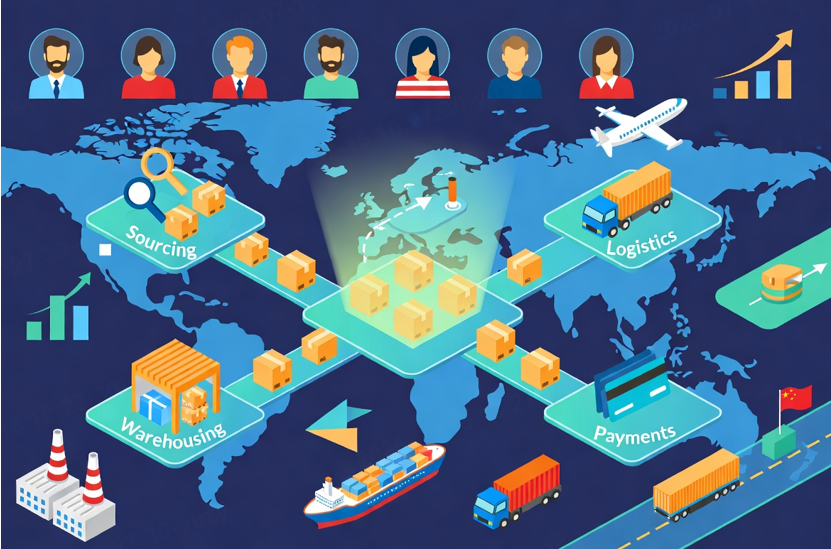
Virto Commerce’s example of a module‑based, low‑dependency platform illustrates how agile principles translate into real architecture. Each module focuses on a distinct function—catalog, orders, pricing, promotions—while remaining loosely coupled, so new capabilities can be added without destabilizing existing workflows. Looperbuy applies a similar mindset to B2B sourcing: sourcing, warehousing, logistics, and payments are integrated but not rigidly bound, giving the platform flexibility to connect with multiple carriers, marketplaces, and suppliers.
This modular thinking is particularly valuable for global merchants who must juggle multiple marketplaces (such as Shopify, TikTok, Mercado Libre, and regional platforms) while keeping a unified view of orders and inventory. As channels or regions change, the platform can adjust integrations and flows instead of forcing sellers into manual workarounds.
How Agile Tools Support the B2B Procurement Cycle
Agile software tools are designed to help teams plan, track, and manage the entire procurement cycle, from product discovery to final delivery. Typical capabilities include:
– Backlogs and boards for managing sourcing requests, vendor negotiations, and logistics tasks in small, trackable units.
– Real‑time dashboards that expose lead times, fulfillment status, and cost trends, allowing faster data‑driven decisions.
– Integrated communication so buyers, suppliers, and logistics partners work from the same information, reducing misalignment and delays.
In practice, this means a procurement team can see exactly which factory is fulfilling which orders, how long goods are in storage, and when shipments are scheduled to move—without relying on scattered spreadsheets or emails.
Looperbuy: An Agile B2B Sourcing and Dropshipping Platform
Looperbuy exemplifies how an agile approach can be embedded into a practical sourcing platform for global merchants. It connects businesses to more than a billion products from verified Chinese suppliers by integrating sourcing, inspection, warehousing, and global logistics in one environment. Sellers can use Looperbuy to source at factory pricing, test small batches, or run full dropshipping operations without committing to traditional inventory models.
Because the platform is designed for flexibility, merchants can manage one‑piece dropshipping orders, bulk wholesale purchases, or OEM/ODM product development through consistent workflows, rather than switching tools or vendors every time their strategy changes.
Reducing Inventory, Logistics, and Operational Costs
One of the most tangible benefits of pairing agile technology with a B2B procurement platform is the reduction of fixed costs and operational risk. Looperbuy allows sellers to operate with little or no upfront inventory by offering ready‑to‑ship overseas stock, one‑piece minimum order quantities, and factory‑direct bulk sourcing on a single platform. This combination helps merchants:
– Avoid tying cash up in large, speculative stock purchases.
– Leverage free warehousing for up to 90 days to buffer demand volatility.
– Combine multiple orders into consolidated shipments, reducing freight costs by up to 40%.
By shifting storage and logistics execution onto a specialized platform, global sellers can focus more on product selection, branding, and customer acquisition.
Real‑World Use Cases: How Sellers Benefit
Case examples shared by Looperbuy’s customers illustrate how agile sourcing and fulfillment flows play out in real operations.
– A small T‑shirt business cut out multiple intermediaries by connecting directly with factories, resulting in higher margins while retaining flexible order volumes.
– A European gift shop recovered from a last‑minute supplier failure because Looperbuy could supply the same product from existing overseas inventory, keeping seasonal demand intact.
– A boutique brand solved cross‑border payment issues by using multi‑currency support, enabling smooth settlements with Chinese factories while selling in different currencies.
These stories highlight the value of integrated but adaptable workflows: issues are resolved at the platform level instead of forcing each merchant to build their own complex infrastructure.
Advanced OEM/ODM and Brand‑Building on Agile Platforms
Beyond basic sourcing, agile platforms can support full OEM/ODM projects, branding, and packaging without overwhelming smaller teams. Looperbuy offers online OEM/ODM development, custom branding, and certification support, coordinated through standardized but adjustable workflows. Merchants can move from rough product concepts to finished goods with tailored packaging and compliance documentation, while the platform manages factory coordination and tracking.
This capability turns agile technology into a growth engine for brands that want to differentiate themselves instead of selling only generic items. As demand evolves, production, packaging, and logistics can be scaled or modified without rebuilding the underlying systems.
Designing a Better User Experience on Agile Procurement Platforms
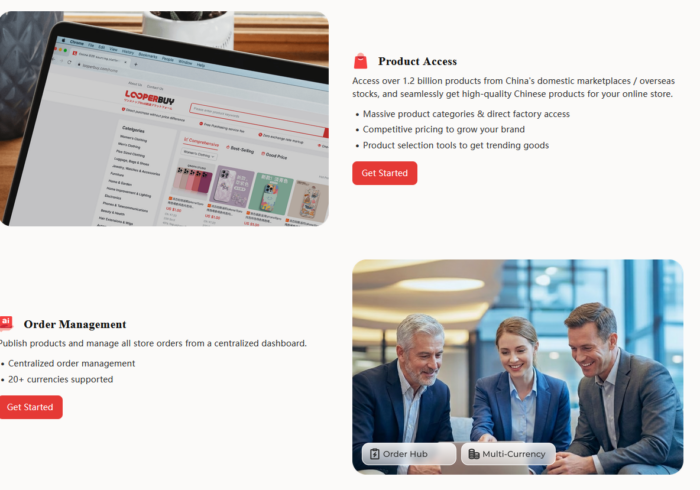
From a user perspective, an effective B2B procurement platform must feel intuitive even when handling complex supply chains. Agile thinking encourages short, clear flows, visual dashboards, and guided steps that help buyers move from product search to delivery with minimal friction. Looperbuy’s interface, for example, emphasizes category navigation, keyword and image search, and step‑by‑step instructions for registering, sourcing, purchasing, storage, and international shipping.
To improve readability and usability for business users:
– Key actions such as “Get Started,” “Contact Us,” and “Help Center” are placed prominently to reduce cognitive load.
– Process steps are broken into simple sequences (product finding, payment, storage, shipping, tracking) so teams can onboard quickly and standardize internal workflows.
– Testimonials and case stories give practical context, helping users understand what type of business each feature is best suited for.
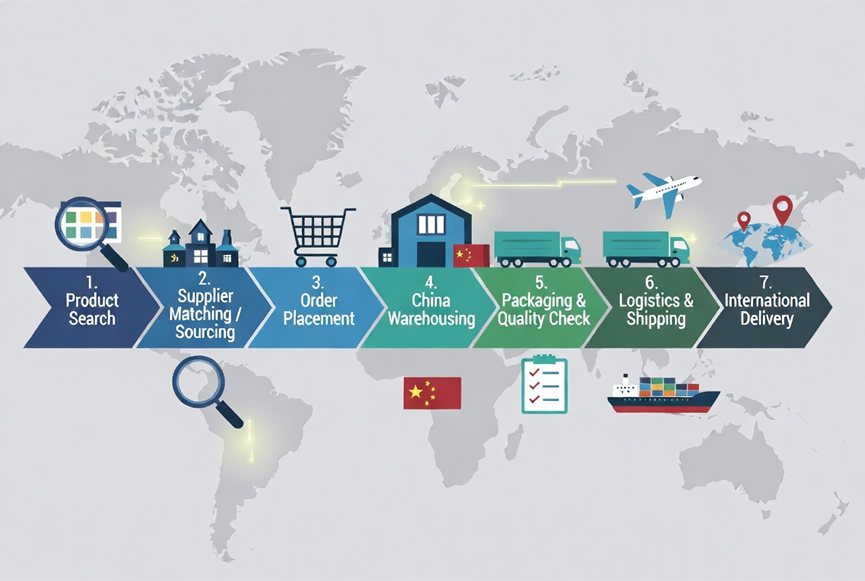
Practical Workflow: From Product Discovery to Global Delivery
A typical agile‑enabled workflow on a platform like Looperbuy can be broken down into clear, repeatable steps.
1. Product discovery
Merchants search by keyword, category, or product images to identify suitable items across a wide catalog.
2. Supplier and pricing selection
The platform surfaces verified suppliers, factory‑level pricing, and options for customization or OEM/ODM, allowing businesses to align choices with margin and brand goals.
3. Order placement and payment
Orders are placed directly through integrated flows, with support for multi‑currency payments that simplify settlements with Chinese factories.
4. Inspection and warehousing
Goods are inspected at the platform’s warehouses, real product photos are generated, and inventory can be stored free for defined periods.
5. Global fulfillment and tracking
Merchants select optimized shipping routes, generate waybills, and monitor shipments through real‑time tracking until delivery.
Because each step is anchored in a system that can evolve, merchants can plug in new markets, logistics partners, or product lines without redesigning their operations from scratch.
Strategic Advantages for B2B Sellers Using Agile Platforms
For B2B sellers—especially SMEs and emerging brands—the strategic advantages of operating on an agile procurement and dropshipping platform are significant. They include:
– Scalable order models: the same environment supports dropshipping, small batch tests, and bulk orders, allowing sellers to change strategies as they grow.
– Risk‑managed global expansion: multi‑warehouse setups, multiple logistics routes, and flexible payments help merchants navigate geopolitical, tariff, and currency volatility.
– Operational focus on brand and customer: by offloading sourcing, inspection, warehousing, and fulfillment to the platform, teams can invest more energy into product positioning and customer experience.
In an era where supply chains are both opportunities and vulnerabilities, this combination of agility and platform support makes it easier for B2B sellers to compete globally without building large back‑office operations.
Targeted advice for B2B sellers
B2B merchants who want to move from reactive sourcing to proactive, scalable operations can start by aligning their procurement workflows with agile platform capabilities.
Key actions:
– Evaluate current processes for product discovery, supplier communication, and logistics to identify manual bottlenecks.
– Map these steps onto platform features such as Looperbuy’s sourcing tools, warehousing options, and logistics routing.
– Pilot a low‑risk use case—such as one‑piece dropshipping or a small OEM test run—to validate how integrated workflows affect margin, time‑to‑market, and customer satisfaction.
For global merchants ready to reduce inventory risk, simplify logistics, and access factory‑direct pricing from China, creating an account and starting a controlled trial on Looperbuy is a practical way to experience agile procurement in a live environment.
FAQs
1. How does an agile platform help reduce inventory risk for B2B sellers?
By supporting dropshipping, small batch orders, and free warehousing, agile platforms enable merchants to align stock levels with real demand instead of committing to large, speculative purchases.
2. Why is modular architecture important in procurement software?
Modular architecture allows teams to add or update functions—such as new logistics partners or payment methods—without destabilizing the entire system, which is crucial for fast‑changing global trade environments.
3. What makes Looperbuy suitable for SMEs entering cross‑border e‑commerce?
Looperbuy combines factory‑level pricing, multi‑currency payments, integrated logistics, and flexible order models, giving smaller businesses enterprise‑level sourcing capabilities without requiring large internal teams.
4. Can agile sourcing platforms support brand‑new product development?
Yes. Through OEM/ODM services, branding support, and packaging customization, platforms like Looperbuy can help merchants turn concepts into finished products and bring them to global markets.
5. How do merchants maintain visibility across multiple marketplaces when using a single sourcing platform?
By centralizing order management, inventory tracking, and logistics coordination, agile platforms provide one view of operations even when sellers are active on several marketplaces such as Shopify, TikTok, or regional platforms.
References
1. Virto Commerce Blog – *The Definition of an Agile Platform* (Aug 5, 2020). [virtocommerce]
2. Looperbuy Official Website – *B2B China Sourcing Platform & Dropshipping Solutions*. [looperbuy]
3. Looperbuy Resources – *Dropshipping Revolution* (2025). [looperbuy]
4. Looperbuy Blog – *Top 10 Global Sourcing Platform in China* (June 21, 2026). [looperbuy]
5. Looperbuy About Page – *About Looperbuy*.[looperbuy]
6. Looperbuy LinkedIn – *One‑Stop B2B Sourcing E‑Platform for Global SMEs*.[linkedin]
7. Atlassian Agile Resources – *Agile Software Development Practices*. [atlassian]
8. Microsoft – *Modern Software Development Practices*.[microsoft]
9. Stackify – *5 Best Practices That Help with Agile Software Development*.[stackify]