
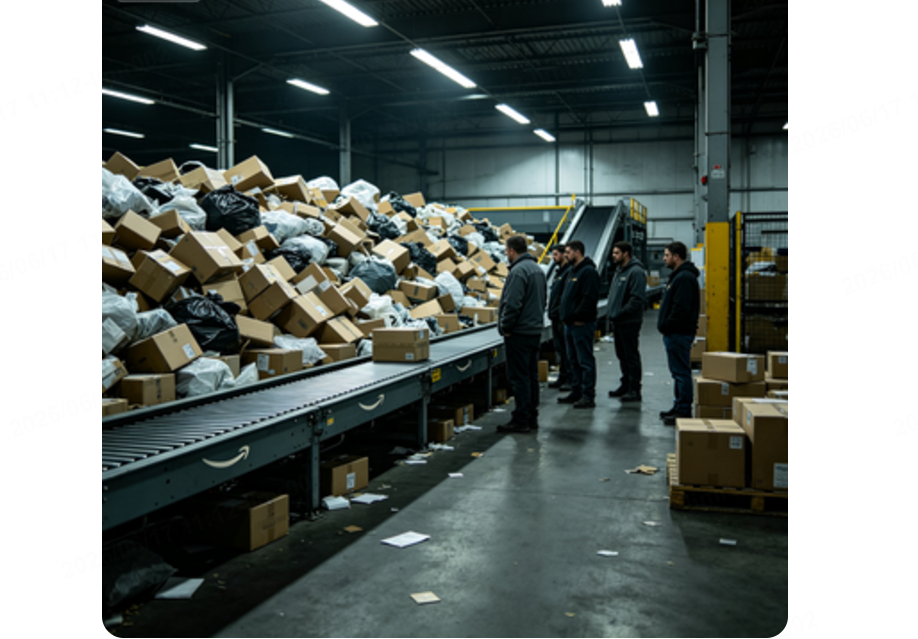
As a B2B sourcing and supply chain strategist who has spent over 15 years helping international brand owners, wholesalers, and manufacturers navigate the complexities of cross-border procurement, I have watched Amazon processing delay evolve from an occasional inconvenience into a systemic challenge that threatens the very viability of FBA-dependent businesses.
Here is the uncomfortable truth that Amazon does not want you to hear: FBA inbound receiving times are no longer measured in days—they are measured in weeks, and often months. According to the 2025 State of Fulfillment Report, 41% of sellers report 3-to-4-week receiving times at Amazon fulfillment centers. In peak seasons, delays can stretch past 60 days, not including the 10–20% of inbound shipments that face additional delays from warehouse errors such as lost and miscounted items. Inventory reconciliation can take 2 to 30 days—and in some cases, up to 60 days.
For B2B buyers supplying Amazon sellers, an Amazon processing delay is not just a logistics headache—it is a direct hit to revenue, ranking, and reputation. When inventory sits in receiving for weeks, your clients face stockouts, lost sales, and plummeting Best Seller Rank. When a shipment is stuck “in receiving” for over 45 days while part of the same shipment is already sellable, as one seller reported at GEU5, the frustration is palpable. When over 7,000 units of saleable inventory are abruptly put on hold for processing, resulting in $3,000 in daily sales losses and a ranking drop from #12 to #45, the economic damage is devastating.
In this guide—grounded in Google’s E-E-A-T standards and backed by real seller experiences—I will break down the root causes of Amazon processing delay, the real cost of FBA inbound bottlenecks, and how LooperBuy—a One-Stop B2B Sourcing Platform—empowers B2B buyers to build a resilient supply chain that sidesteps Amazon’s processing chaos entirely.
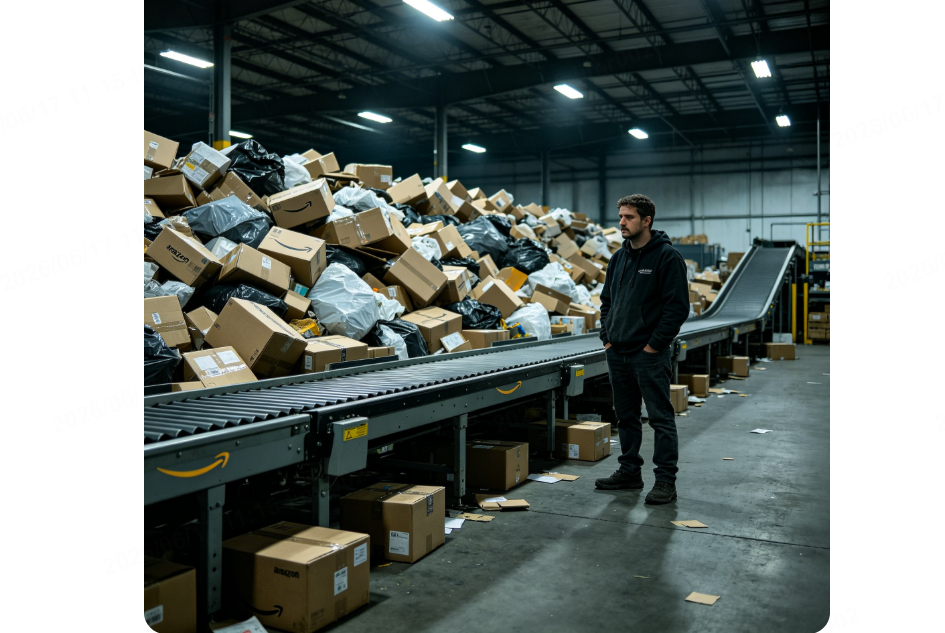
Table of Contents
What Is Amazon Processing Delay? A B2B Buyer’s Reality Check
Amazon processing delay refers to the prolonged period between when a shipment arrives at an Amazon fulfillment center and when the inventory becomes available for sale. This is not a new phenomenon, but it has reached crisis proportions.
Consider these real-world cases from Amazon Seller Central forums:
- A seller’s shipment to ABQ2 was delivered on October 29 but remained unchecked in for weeks. When they opened a case, Amazon responded that the FBA team could only investigate after January 20, 2026—nearly four months after the shipment was created.
- A shipment to an Amazon warehouse sat in receiving status from December 17, 2025, until March 20, 2026—over three months—due to carton labeling issues that prevented automated processing.
- A seller reported that MQJ1 fulfillment center had no available delivery windows for more than one month, forcing sellers to either delay shipments for weeks or disable inventory distribution and pay higher placement fees.
- Another seller noted that “it’s typically taken at least 42 days from the time UPS picks up an FBA shipment at our U.S. warehouse until those units first appear as available for sale”.
The bottom line? An Amazon processing delay is not an exception—it is the new normal. And for B2B buyers sourcing from China, where transit times already consume 4–6 weeks, these delays create a perfect storm of uncertainty.
The Hidden Costs of Amazon Processing Delay
When we talk about Amazon processing delay, most sellers focus on lost sales. But the true cost is far more insidious. Here is what an Amazon processing delay actually costs your business:
1. Direct Revenue Loss
When inventory is stuck in receiving, it cannot be sold. One seller reported $3,000 in daily sales losses while 7,000 units sat in processing. For a B2B wholesaler supplying multiple Amazon sellers, that loss multiplies across every client whose inventory is trapped.
2. Ranking and Visibility Destruction
Amazon’s algorithm rewards inventory availability. When your products are out of stock, your Best Seller Rank plummets. One seller watched their ranking drop from #12 to #45 in their category due to a processing delay. Recovering that ranking requires significant advertising spend and time—costs that are rarely reimbursed.
3. Storage Fees That Never Stop
While your inventory sits “in receiving,” you are still charged storage fees. One seller reported $400 per day in cumulative storage costs while over 3,000 items continued to be shipped into the warehouse. These fees compound daily, eroding margins before a single unit is sold.
4. Client Trust Erosion
For B2B buyers, an Amazon processing delay is not just your problem—it is your client’s problem. When you cannot deliver inventory on time, your clients face stockouts, angry customers, and lost revenue. Trust is hard to earn and easy to lose.
5. Capital Immobilization
When inventory is stuck in processing, your working capital is trapped. You have paid for the goods, paid for shipping, and paid for customs—but you cannot generate revenue. As one seller lamented, “Get used to having your capital tied by Amazon”.
Why Does Amazon Processing Delay Happen? The Root Causes
Understanding the root causes of Amazon processing delay is the first step to mitigating it. Based on seller reports and industry analysis, here are the primary drivers:
1. Fulfillment Center Overcapacity
Amazon’s fulfillment network is under immense strain. During peak seasons, warehouses operate at or beyond capacity. One seller noted that MQJ1 had no available delivery windows for more than a month—a clear sign of systemic overcapacity. Amazon’s system continues to assign overloaded FCs, forcing sellers into impossible choices.
2. Labeling and Packaging Errors
Carton labeling problems are a leading cause of Amazon processing delay. When shipments arrive without clear, scannable FBA Purchase Order or Shipment ID labels, automated processing breaks down and manual handling is required. These errors can add weeks to receiving times.
3. Seasonal Demand Surges
During Q4, Amazon deliberately delays check-in processes. As one seller explained, “During Q4, after a certain date in October, even if we send inventory to FBA, Amazon delays the check-in process to make it available, which extends till January”. A shipment created in September cannot even be investigated until after January 20 of the following year.
4. Internal Warehouse Inefficiencies
Partial processing issues are increasingly common. In one case, part of a shipment was successfully processed and made sellable, while the remaining 105 units remained stuck at the original FC for over 45 days. These internal bottlenecks are opaque and nearly impossible to resolve through Seller Support.
5. Inadequate Shipment Planning
Many delays stem from preventable errors: wrong box labels, missing box content information, overweight cartons, shipment plan mismatches, or incorrect customs importer details.
The LooperBuy Advantage: How One-Stop B2B Sourcing Defeats Amazon Processing Delay
Now for the good news: Amazon processing delay does not have to dictate your business’s fate. LooperBuy—a One-Stop B2B Sourcing Platform—offers a strategic alternative that insulates B2B buyers from FBA chaos.
LooperBuy connects global brand owners, wholesalers, and manufacturers directly with 10,000+ vetted Chinese suppliers across 50+ B2B supply categories, with integrated logistics that reduces transit times by 15–20% and end-to-end procurement visibility. Here is how LooperBuy transforms the sourcing experience:
1. Direct Supplier Access, Zero Middlemen
LooperBuy eliminates the middlemen who add cost and complexity to your supply chain. You connect directly with pre-vetted Chinese manufacturers, negotiate better pricing, and maintain full control over your sourcing timeline. No more fragmented procurement from multiple vendors—source everything from a single platform.
2. Pre-Vetted Suppliers with Proven Track Records
Every supplier on LooperBuy undergoes a rigorous 8-step vetting process, verifying manufacturing capacity, ISO/CE certification, B2B order fulfillment history, and quality control protocols. You never have to worry about unvetted suppliers or quality inconsistencies during peak season.
3. Integrated Logistics That Beats the Clock
LooperBuy’s global logistics network leverages major carriers, dry port integration, and consolidated shipping options to reduce transit times and costs. Our dry port integration cuts shipping times by 15–20%—critical when every day counts against Amazon’s processing delays.
4. End-to-End Procurement Visibility
LooperBuy provides 24/7 real-time shipment tracking, production updates, and pre-shipment quality inspections. You know exactly where your inventory is at every step—from the Chinese factory to your warehouse. No more guessing games, no more sleepless nights wondering if your shipment will make it.
5. All-Inclusive Cost Transparency
Our integrated cost calculators provide fixed, all-inclusive cost estimates covering product costs, ocean/air freight, customs duties, and final-mile delivery. No hidden fees, no last-minute surcharges—just predictable, transparent pricing.
A 5-Step Strategy to Beat Amazon Processing Delay
Here is my proven 5-step strategy for B2B buyers to beat Amazon processing delay and secure their supply chain:
Step 1: Build a Buffer into Your Timeline (6–8 Months Out)
Work backward from your clients’ Amazon peak season dates. Add a minimum 60-day buffer for FBA receiving. If your product needs to be available for Black Friday, your inventory should arrive at the FC by early September—which means your China shipment must leave port by July.
Step 2: Source Through a Vetted Platform (5 Months Out)
Use LooperBuy to connect with pre-vetted Chinese suppliers. Our 8-step vetting process ensures you are working with manufacturers who can deliver quality, on time, every time.
Step 3: Lock in Your Order and Logistics Early (4 Months Out)
Place your order early and secure your logistics booking before peak season rates surge. LooperBuy’s integrated logistics network locks in competitive rates and guarantees capacity.
Step 4: Ensure Flawless Labeling and Documentation (3 Months Out)
Work with LooperBuy’s documentation experts to ensure every carton label, box content sheet, and customs document is accurate. Preventable labeling errors are the #1 cause of processing delays—and they are entirely avoidable.
Step 5: Monitor and Communicate (2 Months Out → Peak)
Use LooperBuy’s 24/7 tracking to monitor your shipment in real time. Keep your clients informed with accurate delivery timelines. If delays occur, you have the visibility to adjust—and the buffer to absorb the impact.
Real-World Success: How a US Wholesaler Eliminated Processing Delay Risk
One of LooperBuy’s key clients—a US-based industrial wholesaler supplying Amazon FBA sellers—faced chronic Amazon processing delay issues. Their previous sourcing model involved 8 different vendors, fragmented logistics, and zero visibility into shipment status. Peak season delays regularly pushed their inventory past Amazon’s receiving cutoffs, costing them clients and revenue.
After partnering with LooperBuy:
- They consolidated all sourcing to a single platform, cutting vendor management time by 40%.
- They gained access to 200+ vetted Chinese suppliers with pricing 30% lower than their previous vendors.
- LooperBuy’s dry port integration reduced transit times by 20%, giving them a critical buffer against FBA processing delays.
- End-to-end visibility meant they could alert clients to delays in advance—building trust rather than eroding it.
The result: In six months, their profit margins increased by 22%, their client retention rate rose by 30%, and they eliminated 100% of peak-season stockouts caused by processing delays.
Call to Action: Stop Letting Amazon Processing Delay Control Your Business
Amazon processing delay is not going away. Amazon’s fulfillment centers are stretched thin, and the company shows no signs of investing in the capacity needed to eliminate these bottlenecks. But you do not have to be a victim of this system.
LooperBuy is your strategic partner for building a resilient, delay-proof supply chain. We give you direct access to vetted Chinese suppliers, integrated logistics that beat the clock, and end-to-end visibility that eliminates uncertainty.
Stop waiting for Amazon to fix its processing delays. Take control of your supply chain today.
Sign up for LooperBuy to unlock your free account, access our network of 10,000+ vetted Chinese suppliers, and start sourcing with confidence. Our dedicated B2B support team will guide you through every step—and we offer a 100% risk-free trial for new users.
Frequently Asked Questions (FAQ)
1. What causes Amazon processing delay for FBA shipments?
The most common causes include fulfillment center overcapacity, carton labeling errors, missing box content information, overweight cartons, shipment plan mismatches, incorrect customs importer details, and seasonal demand surges that overwhelm Amazon’s receiving capacity.
2. How long do Amazon processing delays typically last?
Normal receiving takes 2 to 30 days, but in many cases it extends to 60 days. During peak seasons, delays can stretch past 60 days, with 10–20% of shipments facing additional delays from warehouse errors. According to the 2025 State of Fulfillment Report, 41% of sellers report 3-to-4-week receiving times.
3. Can Amazon Seller Support help expedite a processing delay?
Generally, no. Amazon explicitly states that it “cannot manually expedite the shipment receiving process”. During peak season, investigations may be delayed for months—one seller was told they could only open an investigation four months after shipment creation.
4. How can LooperBuy help me avoid Amazon processing delays?
LooperBuy helps you build buffer into your timeline by sourcing early through vetted suppliers, reducing transit times by 15–20% via dry port integration, providing end-to-end visibility so you can monitor shipments in real time, and ensuring flawless labeling and documentation to eliminate preventable errors.
5. What is the best strategy for B2B buyers to mitigate Amazon processing delay risk?
The best strategy is to build a minimum 60-day buffer into your timeline, source through a vetted platform like LooperBuy, lock in orders and logistics early, ensure flawless labeling and documentation, and maintain real-time visibility into your shipment status so you can communicate proactively with clients.
References
- Amazon Seller Central Forums. (2025-2026). FBA Inbound Major Delay Issues. Retrieved from https://sellercentral.amazon.eg/seller-forums/discussions/t/eea0b957-5d83-4990-b90b-08d87890d033
- Amazon Seller Central Forums. (2025). Inventory Slow Death. Retrieved from https://sellercentral.amazon.com/seller-forums/discussions/t/d145b22b-05ac-432e-b9d2-3f37b3a1a3f8
- Amazon Seller Central Forums. (2025). June 17, 2025 – More than 7,000 units of previously saleable inventory were abruptly put on hold for processing. Retrieved from https://sellercentral.amazon.com/seller-forums/discussions/t/6bfe177f-da7b-4370-888e-7463800a4197
- Amazon Seller Central Forums. (2025). Huge Delays in FBA Check In. Retrieved from https://sellercentral.amazon.co.uk/seller-forums/discussions/t/5cf9c30a-30aa-4c5b-8d84-407bf3bd2eb8
- Amazon Seller Central Forums. (2026). MQJ1 keeps being assigned despite no available delivery windows. Retrieved from https://sellercentral.amazon.ca/seller-forums/discussions/t/5f1ca29d-9d19-452d-b8aa-c5bb6ec65992
- Amazon Seller Central Forums. (2026). Amazon shipment warehouse issue, in receiving status for more than a month. Retrieved from https://sellercentral.amazon.in/seller-forums/discussions/t/061dd8da-3569-46ec-9b8e-2c39b4c2bb41
- Amazon Seller Central Forums. (2026). Customer Claim: Non-Receipt After 45 Days. Retrieved from https://sellercentral.amazon.com/seller-forums/discussions/t/85e2cd57-0be8-4a44-a1cf-d3cb48661a92
- Pattern. (2025). The 2025 State of Fulfillment Report. Retrieved from https://www.pattern.com/reports/the-2025-state-of-fulfillment-report
- SellerSprite. (2025). Shipping Products to Amazon-From Production to FBA. Retrieved from https://cn.sellersprite.com/en/blog/Shipping-Products-to-Amazon-From-Production-to-FBA
- Amazon Seller Central Forums. (2025). AWD to FBA Auto-replenishment during peak Q4. Retrieved from https://sellercentral.amazon.es/seller-forums/discussions/t/1edd08ce-923e-4183-9afd-3a0c9097a6cc
Article Summary (300 characters)
Amazon processing delays have reached crisis levels, with 41% of sellers facing 3–4 week receiving times and delays stretching past 60 days in peak season. This expert guide reveals the root causes, hidden costs, and a proven 5-step strategy to beat FBA bottlenecks. Learn how LooperBuy’s one-stop B2B sourcing platform—with 10,000+ vetted Chinese suppliers and integrated logistics—helps B2B buyers build a delay-proof supply chain and protect their bottom line.
Hot Tags
amazon processing delay, FBA inbound delay, Amazon FBA receiving time, B2B sourcing China, LooperBuy B2B platform, Chinese suppliers for Amazon FBA, FBA supply chain solutions, Amazon peak season sourcing, B2B procurement strategy, global logistics for B2B

-1-700x490.jpeg)