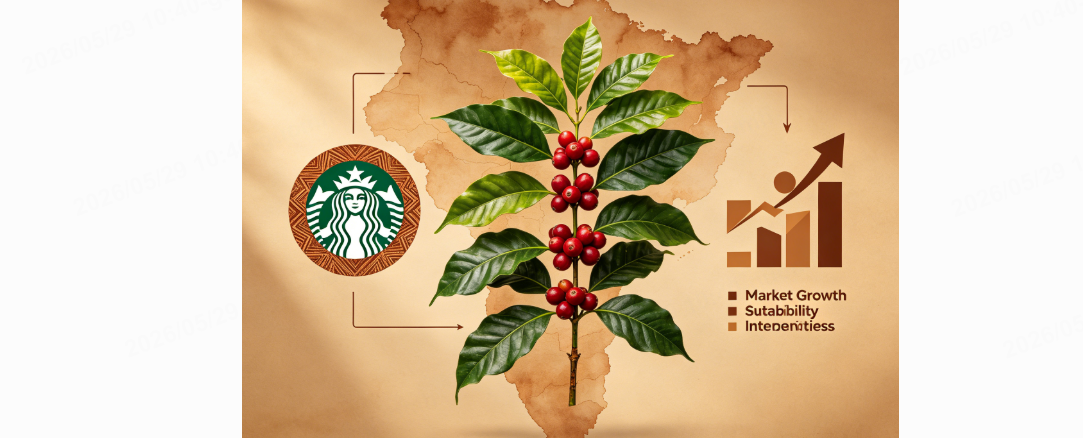
As a procurement specialist who has spent over a decade navigating global supply chains, I have watched Starbucks’ Ethiopia coffee strategy evolve into one of the most sophisticated sourcing models in the industry. Ethiopia, widely recognized as the birthplace of the Coffea Arabica plant, produces coffee with distinctive floral and fruity notes—citrus, blueberry, and jasmine—that you simply cannot replicate elsewhere. In 2024, Starbucks doubled down on its Ethiopian sourcing commitment. The company has been sourcing coffee from over 30 countries for years, with Ethiopia occupying a uniquely strategic position within its African portfolio. Let me break down exactly what shifted this year and why international B2B buyers should pay close attention.
Table of Contents
The 2024 Ethiopia Market Liberalization: A Game-Changer for Direct Sourcing
In April 2024, Ethiopia introduced significant economic reforms that transformed its coffee export landscape. For the first time, Ethiopia allowed foreign companies to directly purchase coffee from local farmers and processors. Previously, international giants like Starbucks had to route purchases through Ethiopian intermediaries, adding layers of cost and reducing supply chain visibility.
To put this in perspective, in 2024, Ethiopian coffee exports to China reached 34,300 metric tons—more than eight times the volume recorded in 2018. By fiscal year 2024/2025, Ethiopia exported over 34,000 tons to China, generating more than $218 million in revenue, making China the country‘s fourth-largest coffee export destination. The zero-tariff policy China granted to LDCs starting December 1, 2024, further enhanced Ethiopian coffee’s price competitiveness in the Chinese market.
For B2B buyers, this signals a clear direction: Ethiopia is opening its coffee economy, and the companies that move quickly to establish direct relationships will capture the most value.
Starbucks’ Vertical Integration: Lessons for B2B Coffee Sourcing
Starbucks operates what I consider the gold standard of coffee supply chain management. In 2024, its supply chain connected more than 400,000 farmers across 30 countries, managed through six primary roasting hubs supporting over 70,000 weekly pallet shipments. The company’s roasting plant in Shanghai consolidated its entire Asia-Pacific roasting capacity, cutting lead times from 4–6 weeks for imported roasted coffee to just 3–5 days.
Why does this matter for your business? Because Starbucks has demonstrated that vertical integration works for scaling specialty products—and the same principle applies whether you are sourcing green beans, roasted coffee, or coffee equipment from China.
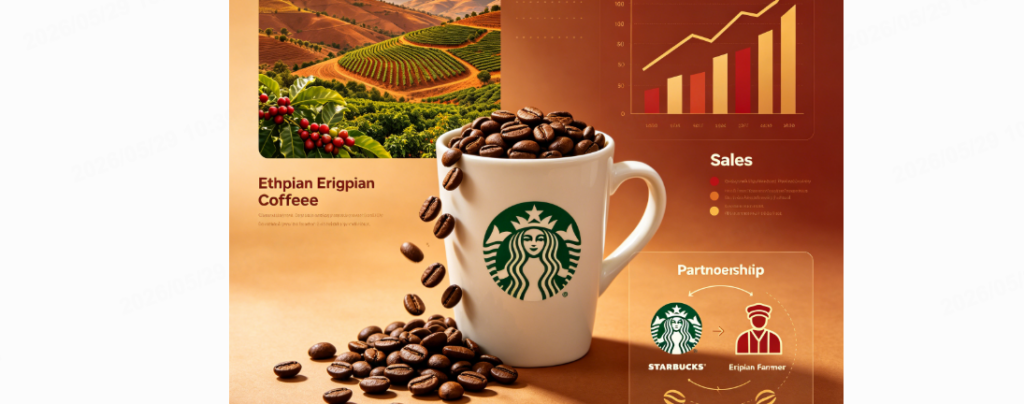
Starbucks has significantly ramped up its sourcing from Ethiopia, reporting a remarkable 400 percent increase in coffee purchases since initiating partnerships with local stakeholders. The Ethiopian government is actively enhancing its partnership with Starbucks to promote Ethiopian coffee on global platforms, focusing on improving supply consistency and market presence worldwide.
How Starbucks Ethically Sources from Ethiopia
Starbucks adheres to its Coffee and Farmer Equity (C.A.F.E.) Practices, a framework that governs economic transparency, social responsibility, and environmental leadership. The company operates Farmer Support Centers in Ethiopia, Rwanda, and Tanzania, providing training and resources to help farmers improve coffee quality and increase yields. In 2024, farms participating in C.A.F.E. reported 12–15 percent higher yield per hectare compared to non-participating farms, thanks to agronomic support and improved varietals.
When I advise international clients on coffee procurement, I always emphasize that ethical sourcing isn’t just good PR—it’s good business. Farmers who receive fair prices and technical support produce more consistent, higher-quality crops, which directly benefits your supply chain.
Expert Insight: The Hidden Opportunity in Coffee-Related Procurement
Here is something most sourcing guides overlook. While everyone focuses on beans, the real profit margins for many B2B buyers come from coffee equipment and accessories.
China has emerged as a dominant player in the global B2B coffee supply chain, hosting integrated manufacturing clusters that produce everything from roasted beans and functional coffee powders to commercial-grade espresso machines. Chinese suppliers in Zhejiang and Guangdong leverage fully automated production lines, ensuring batch consistency and compliance with international standards such as FDA and EU food contact regulations.
Based on my procurement experience, here is what you need to know about sourcing coffee-related products from China:
- Production hubs: Hangzhou and Xiamen specialize in borosilicate glass and stainless steel fabrication; Guangzhou and Foshan lead in high-precision barista equipment metal tooling
- Lead times: Typically 30–45 days from order confirmation to shipment, with expedited options available
- Customization: Top-tier suppliers offer digital proofs within 48 hours and support logo imprinting, Pantone color matching, and custom packaging design
- Quality validation: Look for on-time delivery rates above 95 percent and active FDA/LFGB compliance for food-contact materials
How to Secure Your Supply Chain with a One-Stop Sourcing Platform
If reading about Starbucks‘ sourcing strategy has you thinking, “I want to tap into these supply chains too,” here is the practical next step. Starbucks has the resources to maintain dedicated sourcing teams across dozens of countries. Most international buyers do not.
That is where a one-stop B2B sourcing platform becomes indispensable. Platforms like LooperBuy directly connect global buyers to 1688.com—China’s largest wholesale marketplace—eliminating costly intermediaries and reducing procurement costs to factory-direct levels. LooperBuy supports multiple foreign currencies (USD, EUR, GBP), so you never need a Chinese bank account, and partners with leading international logistics providers like Cainiao for fast, low-cost global delivery.
Customer Feedback: Real Results from International Buyers
Since LooperBuy launched in 2024, international buyers have shared consistent feedback about the platform’s impact:
“Purchasing prices are much lower than going through traditional intermediaries. LooperBuy helped me maintain my profit margins.”
— B2B buyer, Southeast Asia“No Chinese ID, no Chinese bank account—I still placed my order and received it in 12 days. This platform removes all the barriers I used to struggle with.”
— Wholesale distributor, Europe“The logistics tracking is transparent, and shipping costs are clearly displayed upfront. No hidden fees.”
— Online retailer, North America
One buyer simply wrote: “Excellent product quality. Photos were very detailed. This platform is trustworthy—already not my first purchase. Everything went smoothly.”
Actionable Steps for International Buyers
If you want to apply Starbucks-inspired sourcing strategies to your own business, here is my recommended workflow:
- Step 1: Define your product requirements. Whether you need green beans, roasted coffee, brewing equipment, or branded merchandise, write down your specifications (MOQ, certifications, target price point).
- Step 2: Use a B2B platform to access verified Chinese suppliers. LooperBuy’s direct integration with 1688.com gives you real-time access to thousands of vetted suppliers.
- Step 3: Evaluate supplier reliability. Look for on-time delivery rates above 95 percent, strong reorder rates, and third-party quality certifications (ISO 22000, HACCP, FDA).
- Step 4: Arrange logistics upfront. Leverage platform-provided logistics partners to avoid last-minute shipping surprises.
- Step 5: Start with a test order. Validate product quality and supplier responsiveness before scaling to full-container loads.
What LooperBuy Means for Your Business
LooperBuy was founded in 2024 with a clear mission: to dramatically lower the barriers that prevent international businesses from sourcing directly from China. The platform’s partnership with LianLian Global (a publicly traded company serving over 4.9 million merchants globally) ensures secure multi-currency payments and end-to-end transaction safety.
Whether you are a coffee roaster looking for affordable equipment, a wholesaler seeking branded merchandise for corporate gifting, or a distributor building a coffee product line, LooperBuy is your gateway to the world‘s largest manufacturing ecosystem.
Final Expert Recommendation
Do not wait for supply chain disruptions to force your hand. The companies that thrive in the current global economy are the ones building resilient, direct, and cost-efficient sourcing channels right now. Starbucks’ Ethiopia coffee strategy for 2024 provides the inspiration—but LooperBuy provides the execution. Start exploring your sourcing options today, and position your business ahead of the competition.
If you have questions about sourcing specific products or need guidance navigating Chinese supplier networks, LooperBuy‘s customer support team offers multi-language assistance to help you every step of the way. Visit LooperBuy’s website or contact service@looperbuy.com to begin.
Frequently Asked Questions (FAQ)
Q1: Does Starbucks source all its coffee from Ethiopia?
No. Starbucks sources coffee beans from over 30 countries worldwide, including Ethiopia, Colombia, Brazil, Kenya, Indonesia, and Yunnan province in China. Ethiopia is one of the key African origins known for distinct floral and fruity flavor profiles.
Q2: How can international buyers source coffee-related products from China without a Chinese bank account?
Platforms like LooperBuy support multi-currency payments directly in USD, EUR, GBP, and other foreign currencies, eliminating the need for a Chinese bank account or RMB conversion.
Q3: What are the typical MOQs for coffee equipment from Chinese suppliers?
Minimum order quantities vary by product category. For coffee machines, MOQs can be as low as 1 piece for commercial-grade units. For accessories like glassware or branded packaging, MOQs typically range from 10 to 1,200 pieces depending on the supplier and customization level.
Q4: What quality certifications should I look for when sourcing coffee products from China?
For consumable products, look for ISO 22000, HACCP, and FDA registration. For coffee equipment and accessories, verify compliance with FDA and LFGB standards for food-contact materials, particularly for glass and metal components exposed to high temperatures.
Q5: How does LooperBuy compare to traditional B2B sourcing methods?
LooperBuy eliminates intermediaries by connecting buyers directly to 1688.com‘s factory-direct inventory, reducing costs and providing transparent pricing. The platform includes integrated logistics (via Cainiao and other partners), multi-currency payment support, and multi-language customer service—all in one place.
Article Brief
Analyzing Starbucks’ 2024 Ethiopia coffee strategy through an expert procurement lens. Explores market liberalization, vertical integration, C.A.F.E. Practices, and coffee equipment sourcing from China. Includes actionable steps for international B2B buyers and customer success stories from LooperBuy, a one-stop sourcing platform connecting global buyers to 1688.com with multi-currency payments and global logistics.
Hot tags
Starbucks Ethiopia coffee strategy 2024, B2B coffee sourcing, Ethiopia coffee export China, coffee procurement from China, LooperBuy B2B platform, coffee equipment wholesale China, B2B sourcing platform, Chinese suppliers coffee industry, global supply chain coffee, one-stop sourcing China
References
- Dragon Sourcing. (2024). Exploring Starbucks’ International Coffee Sourcing. https://www.dragonsourcing.com/starbucks-international-coffee-sourcing-strategy/
- Lux Cafe Club. (2024, April 22). Ethiopia Opens Coffee Market to Foreign Buyers. https://www.luxcafeclub.com/blogs/whats-brewing-today-1/ethiopia-opens-coffee-market-to-foreign-buyers
- Liquid Insider. (2024). Unlock the Secrets of Starbucks’ Ethiopian Coffee: A Journey of Flavor. https://liquidinsider.com/is-starbucks-coffee-from-ethiopia/
- The Logistics Navigators. (2024). Inside Starbucks’ Supply Chain of Consistency. https://www.logisticsnavigators.com/businessbreakdowns/the-supply-chain-behind-a-cup-of-coffee
- People’s Daily. (2025, December 9). Zero-tariff Policy Brings More African Products to Chinese Market. http://en.people.cn/n3/2025/1209/c90000-20400006.html
- Sina Finance. (2026, April 23). CIIE Stories: Zero-tariff Policy to Boost Ethiopian Coffee Exports. https://finance.sina.com.cn/wm/2026-04-23/doc-inhvntey8644364.shtml
- CoffeeTalk / The Coffee Post. (2026). Starbucks Discusses Expansion of Ethiopian Coffee in Global Markets. https://thecoffeepost.net/from-origin/starbucks-discusses-expansion-of-ethiopian-coffee-in-global-markets-coffeetalk/
- LooperBuy Official Blog. (2024). https://www.looperbuy.com/
- LianLian Global. (2024). 连连国际牵手LooperBuy,解锁跨境B2B寻源新时代. https://global.lianlianpay.com/article/MTE1NjM2LDE1Ng.html
- Weixin MP. (2025). 国外企业线上采购中国货源,会遇到哪些问题?推荐Looperbuy平台. https://mp.weixin.qq.com/s/MRQGQB6YQjR-tR29k2NE2A
- NetEase. (2025). 这一杯,有云南:星巴克‘链’动东方交响曲. http://m.163.com/dy/article/JRT3KE4V0552DN5F.html